Seated / Position Guide
CrabSex Position
Hips up, hands down, and a countdown running on your wrists.
The Crab is a seated position that turns into a plank if you hold it long enough. The receiving partner sits on the bed and leans back onto both hands. The knees bend with the feet flat on the mattress. Then the hips lift. The giving partner kneels in front, facing them. It is open and face to face. It is also, without warning, a core exercise.
Nobody talks about the wrists. They should. The Crab gives a great angle and real eye contact, but the arms holding you up have a shelf life. Plan for short rounds with breaks, and it works beautifully. Plan for a marathon and your shoulders will file a complaint.
WhatThe Crab Is
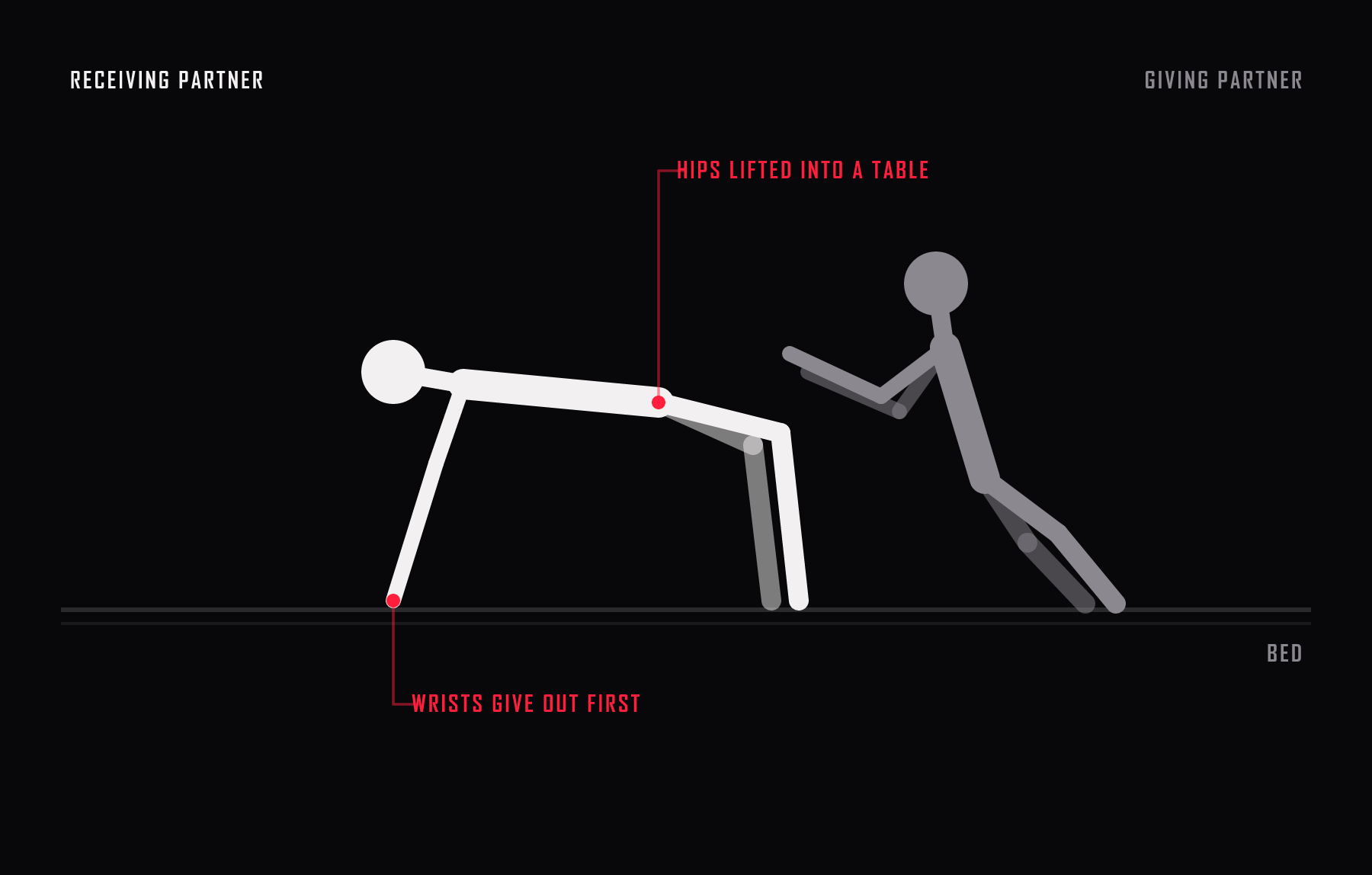
Picture the crab walk from gym class, only slower and with better lighting. The receiving partner sits on the bed with the knees bent and the feet planted. Both hands go behind the hips, fingers pointing back or out to the sides. Then the hips press up off the bed.
The giving partner kneels in front, between the bent knees. From there the two bodies meet in the middle, roughly level. It shows up on a lot of position lists as an intermediate pick, which is fair.
Getting in is a two step job. The receiving partner sits, plants the hands, then presses the hips up as the giving partner moves in close. Doing it in the other order leaves someone holding a bridge and waiting. Nobody enjoys that.
Why The AngleIs Good
The lifted hips do two things at once. They open the angle, and they put the receiving partner in charge of height. Press up a little and the fit changes. Lower an inch and it changes again. Not many positions hand over that much control to the person underneath.
Eye contact is the other selling point. Faces stay level and close, and both people can see what is landing. Deeper options like the mating press trade some of that away for reach. The Crab keeps it.
The feet are the steering wheel. Heels pulled in close to the hips raise the whole bridge and steepen the angle. Sliding the feet forward a few inches drops the height and flattens things out. The receiving partner can make that change without saying a word.
Breathing matters more than it should. Holding a bridge tempts people to hold their breath, and that is when arms give out early. Long breaths out keep the shoulders loose. It sounds like yoga advice because it is.
How much can you prop it up?
Slide it to see how much support you add. More support means less strain and a much longer run time.
How To GetInto It
- 1
Sit and plant the feet
The receiving partner sits on the bed with the knees bent. Feet stay flat and about hip width apart.
- 2
Set the hands
Place both hands behind the hips with the fingers turned out to the sides. Fingers pointing straight back looks tidier and hurts sooner.
- 3
Lift the hips
Press through the heels and raise the hips until the body makes a rough table shape. Do not lock the elbows.
- 4
Bring the partner in
The giving partner kneels between the bent knees and moves in close. Heights should match without anyone straining upward.
- 5
Set a timer in your head
Go for a few minutes, then drop down and reset. Coming back up is easier than pushing past the burn.
The Wrists GiveOut First
Here is the part most guides skip. Your legs are fine. Your core is fine. The wrists and shoulders are the ones that quit, usually somewhere around the two minute mark, and they quit without warning.
Fingers pointed straight back stretches the wrist joint hard. Turning the hands out to the sides helps a lot. So do fists on the mattress, or forearms flat if you are willing to lose some height. None of this makes the position last forever. It just buys you time.
The neck deserves a mention too. Letting the head hang all the way back looks dramatic and gets uncomfortable quickly. Keep the chin loose and the gaze forward instead. Tucking it hard into the chest is no better.
Ways To MakeIt Last
Put a firm pillow under the lower back so the hips do not have to hold themselves up. This is the single biggest upgrade, and it costs nothing.
Use the edge of a couch. The receiving partner rests the shoulders on the cushions and the arms get a real break. The angle stays, the strain goes. A little good lube also helps, since this is not a position where you want to stop and fuss.
Switch out every few minutes on purpose. Drop down for a breath, then come back up. Short rounds beat one long grim effort, and the same trick works in other propped positions like the butter churner.
Give the giving partner a job with the hands. Sliding both palms under the lower back of the receiver adds real support and takes weight off the arms below. It is the cheapest fix on this list and it works instantly.
Pace it in short waves. Build for thirty seconds, ease off, then build again. The stop and start suits a position with a built in timer better than one steady climb does.
What is your Crab tonight?
Tap the mood.
Who ShouldTry It
The Crab suits people with decent shoulder strength who like being able to see their partner. It rewards anyone who enjoys steering the pace from below.
Skip it if the wrists are a sore spot, or if you want something you can hold for twenty minutes. It is a highlight, not a whole evening. Say up front that it will be short, and nobody feels rushed when you switch. Couples who talk about pace handle that switch better.
There is a decent recovery move built into this one. When the arms are done, the receiving partner lowers flat and lets the knees stay bent. The giving partner stays where they are and the angle only changes a little. From there you can rest for a moment and press back up.
What GoesWrong
Locking the elbows straight
Locked elbows feel more stable and load the joint directly. A soft bend keeps the muscle doing the work, which is what buys the extra minute.
Pointing the fingers forward
Fingers turned out to the sides takes the strain off the wrist. Forward is the default hand position and it is the one that ends this position first.
Staying up until something gives
Short rounds with a deliberate drop between them beat one long hold. Coming back up is easy, and it is far easier than coming back from a strained wrist.
Questions PeopleAsk
What is the Crab sex position?
The Crab is a seated position where the receiving partner leans back on both hands with the knees bent and the hips lifted. The giving partner kneels in front, facing them. It gives an open angle and steady eye contact.
Why do my wrists give out in the Crab?
Most of your body weight is going through two small joints at an awkward angle. Turning the hands out to the sides helps. Resting on fists or dropping to the forearms helps more.
How long should the Crab position last?
A few minutes at a time is normal. Treat it as somewhere you visit and leave rather than a position you hold. Coming down for a break and going back up works better than grinding it out.
Is the Crab easier than the butter churner?
Yes, by a fair margin. The butter churner puts the receiving partner upside down on the shoulders. The Crab keeps everyone upright and level, so it asks far less of the neck.
Can you do the Crab on the floor?
You can, and the firmer surface actually makes the lift easier. Put a rug or a folded blanket under the hands first. Bare floor under the wrists gets unpleasant fast.