
Advanced / Position Guide
BridgeSex Position
This is a plank with a better reason. Count it in seconds, not minutes.
The bridge has the receiving partner lifting their hips off the ground with their weight on their hands and feet, body arched upward, while the giving partner kneels between their legs. It creates a striking angle and it is, unmistakably, an exercise.
The honest framing is the one nobody uses. This is a held strength position, so count it in seconds and treat it like a set. Everything else written about the bridge assumes it can be a whole session, which is why it gets tried once, abandoned, and quietly written off as a personal shortcoming.
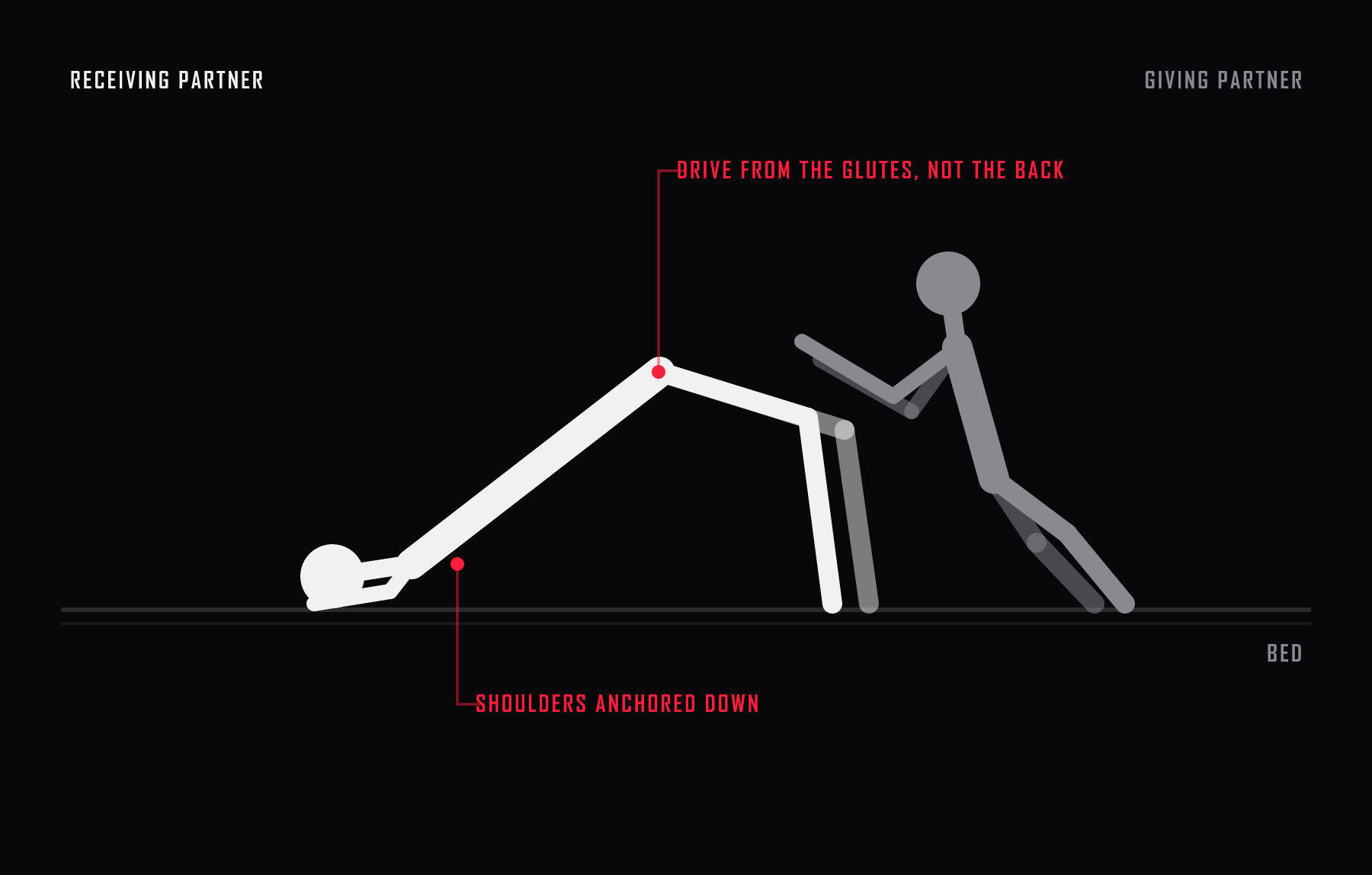
What TheBridge Is
The receiving partner lies on their back, plants their feet flat and their hands beside their shoulders or by their hips, then pushes the hips upward into an arch. The giving partner kneels between the legs and meets the raised hips.
The raised hips create a steep upward tilt, which is where the angle comes from. It is the same tilt a pillow under the hips produces in missionary, except here a person is providing it with their own muscles instead of a cushion.
It sits at the demanding end of any list of position guides. The old guides that filed it under core strength had the right idea, because that is precisely what it is asking for.
Count ItIn Seconds
Glutes, hamstrings and lower back hold this position, and shoulders and wrists take the rest. A held bridge is measured in seconds rather than minutes, and form starts going long before you expect it to. Form going is exactly when the lower back is at risk.
That is not a fitness failure, it is what a held bridge is. Gymnasts do not hold one for twenty minutes either. Planning for a short, deliberate stretch and then coming down is the difference between this being fun and this being a strain.
The tell that it is time to stop is the hips sagging. When the arch starts dropping, the lower back is taking load it should not, and the answer is coming down rather than pushing for another thirty seconds. The wheelbarrow has the same short honest limit for the same kind of reason.
How much support is under the hips?
Slide it from an unsupported hold to a fully propped version. The right hand side is where this becomes repeatable.
How To ActuallyDo It
- 1
Warm up honestly
Cold hip flexors and a cold lower back are how this goes wrong. A minute of moving first is not overcautious for a position that is a strength move.
- 2
Plant the feet and hands
Feet flat and close to the hips, hands beside the shoulders or by the hips. A narrow base makes the lift much harder than it needs to be.
- 3
Push the hips up, not the back
Drive from the glutes and heels so the lift comes from the hips. Arching from the lower back is what causes the ache afterwards.
- 4
Set a short window
Agree a short window. Decide before you start that it is a set rather than a session and the whole thing gets better.
- 5
Come down before the sag
Sagging hips means the lower back is taking the load. Lower deliberately rather than collapsing, and swap to the supported version.
ComfortAnd The Lower Back
The lower back is the thing to protect here. The lift should come from the glutes and heels, not from arching the spine, and the difference between those two is easy to feel once you know to check for it.
Wrists take a lot in the full version. Coming onto the shoulders instead of the hands removes most of that and adds a surprising amount of time, and it barely changes the angle.
Everything about this position is steep and short, which leaves little room for gradual adjustment. Start shallow, use lube, and treat the first few seconds as the setup rather than the position.
VersionsWorth Trying
The shoulder bridge, with the weight on the shoulders and upper back rather than the hands, is far more sustainable and keeps almost all of the angle. This is the version worth learning first.
A firm cushion, folded blanket or wedge under the hips gives the same tilt with none of the hold. It is not a lesser version, it is the one you can stay in, and it is the version couples end up keeping.
Feet up on a low surface with the hips supported changes the angle again without asking anyone to hold anything. For the same upward tilt with no strength involved at all, the butterfly gets there using furniture.
What is your bridge tonight?
Tap the mood.
WhoIt Is Best For
This suits people who like a position that is also a small physical challenge, and couples happy to treat something as a thirty second showpiece rather than the main event. The supported versions open it up to almost anyone.
It is a poor fit for anyone with lower back or wrist trouble, and that is worth taking seriously rather than trying once to check. If you want the angle rather than the effort, go straight to the cushion version and skip the hold entirely, because the angle is the good part.
What GoesWrong
Arching the lower back instead of driving the hips
The lift comes from the glutes and the heels. Arching to get height moves the load into the lower back, which is exactly the part of this position that goes wrong.
Going in cold
Cold hip flexors and a cold lower back are how this ends badly. A minute of movement first is not optional for a held strength position.
Holding on past the sag
Sagging hips mean the lower back has taken over. That is the signal to come down deliberately, not the point at which to push for a few more seconds.
Questions PeopleAsk
What is the bridge sex position?
The receiving partner lifts their hips off the ground with their weight on their hands and feet, arching upward, while the giving partner kneels between their legs. The raised hips create a steep upward angle.
How long can you hold the bridge position?
Usually twenty to sixty seconds. It is a held strength position, so glutes, hamstrings, lower back and wrists all fatigue quickly. Treating it as a short set rather than a session is the realistic approach.
Is the bridge position bad for your back?
It can be if the lift comes from arching the spine rather than driving through the glutes and heels, or if you hold it past the point where the hips start sagging. Anyone with existing lower back trouble should use the cushion supported version instead.
What is the easier version of the bridge position?
Put a firm cushion, folded blanket or wedge under the hips. It produces the same tilt with none of the hold, and couples end up preferring it because they can actually stay in it.
What is the difference between a bridge and a shoulder bridge?
A full bridge takes the weight on the hands and feet with the arms straight. A shoulder bridge rests the weight on the shoulders and upper back instead, which is far more sustainable and keeps nearly all of the angle.