
Seated / Position Guide
CaptainSex Position
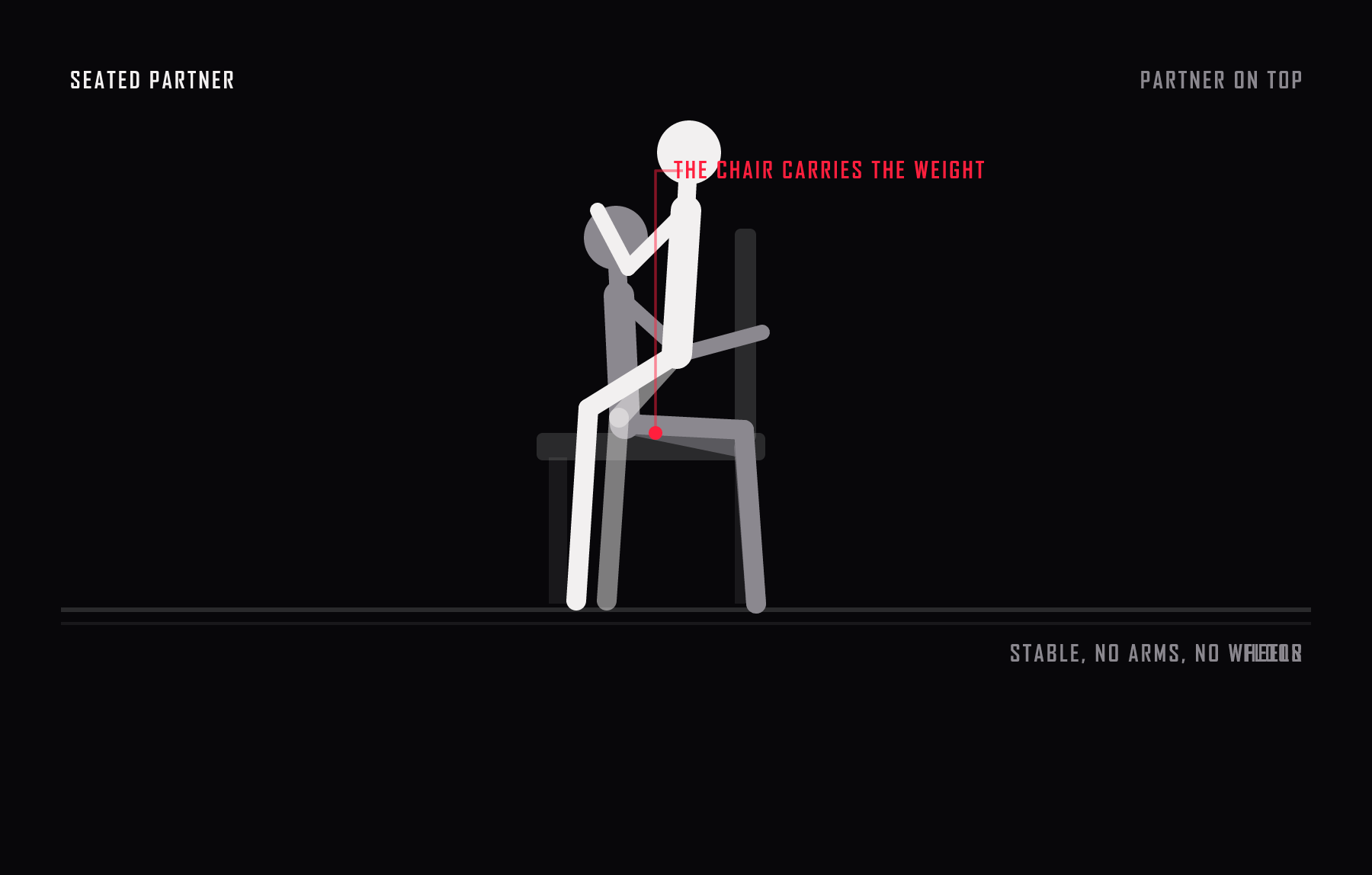
A chair holds the weight so nobody has to. That is the whole trick.
The captain is the seated position people reach for when the floor has stopped being fun. One partner takes a chair. The other sits down onto their lap, facing toward them or away, and the chair handles every bit of weight that arms and knees would otherwise carry. It is upright and close, and it is easy to hold for a long time. It also requires exactly one piece of furniture you already own.
Most of the skill here is in the setup rather than the motion. Pick the right seat. Get the feet planted. After that the position mostly runs itself, and the receiving partner controls depth from the top. That is a good deal for something this simple.
WhatThe Captain Is
The captain is a seated position, and it is sometimes called the captain's chair. One partner sits on a sturdy chair or on the edge of a bed with both feet flat on the floor. The receiving partner lowers onto their lap, either facing them or facing away from them. The chair is not scenery in this arrangement. It is doing the structural work that somebody's arms or knees normally get stuck with.
That single detail is why this one lasts. In most upright positions, somebody is holding a plank or bracing on a forearm. Ten minutes in, a burning shoulder decides when you stop, which is a strange thing to hand the decision to. Here the seat carries the load. Both people can stay put long past the point where a floor position would have quit on them. If that appeal makes sense to you, the rest of the position library has a few more seated setups worth stealing from.
Facing forward gives you eye contact and a lot of skin against skin. Move that facing version to the edge of a couch, chest to chest, and it becomes the face off. Facing away opens a different angle and a very different view. Neither version is harder than the other. They simply feel like two separate positions, which is decent value out of one chair.
WhyThe Angle Works
Depth in the captain belongs almost entirely to the receiving partner. They are on top, their feet are on the floor, and they decide how far they sink. That is an unusual amount of control for an upright position. The seated partner can help with pace, but they are not the one steering. Most people find that this removes the guesswork early on. Nobody has to guess what the other person wants and then correct course in a hurry.
The angle shifts a lot depending on lean. Leaning forward, chest toward chest, shortens the reach and pushes contact toward the front. It also brings both bodies close enough that a grinding motion replaces thrusting, which many people prefer anyway. Leaning back, with hands braced on the seated partner's knees, opens the hips and moves the pressure somewhere else entirely. Try both before you decide the position does not work for you. The difference between them is bigger than it sounds on paper.
Because the chair holds everyone up, hands are free. That is not a small perk. Take a close face to face setup like the romantic position. One set of hands is usually busy keeping a body off the mattress. Here both people have hands free for a back, a hip, a jaw, or whatever else comes to mind.
How far do you lean?
Lean is the only dial that really matters in this position. Slide it and watch the angle and the closeness trade places.
How To SetIt Up
- 1
Test The Chair
Pick a stable seat with no arms and no wheels. Sit on it together first to make sure it does not creak or slide.
- 2
Sit And Plant
The seated partner sits back into the chair with both feet flat on the floor. Knees should land at about a right angle.
- 3
Line Up First
The receiving partner backs up until their calves touch the chair. Reach down and guide before any weight goes down.
- 4
Lower Slowly
Hands go on the seated partner's shoulders or knees for balance. Sink at your own speed and stop wherever the depth feels right.
- 5
Find The Lean
Rock forward for closeness or press back for a different angle. Small shifts change the feel far more than speed does.
PickingThe Right Chair
Chair choice makes or breaks this position. You want a seat with no arms, or arms low enough to stay out of the way. A dining chair usually works. An office chair on casters usually does not, because a rolling seat turns a good idea into a slapstick routine. If the chair swivels, lock it or pick something else.
Height matters more than people expect. The seated partner should have both feet flat on the floor with knees at roughly a right angle. Too low and their hips roll backward, which flattens the angle for everyone. Too high and they end up on tiptoe with no base to push from. The edge of a bed works for the same reason a good chair does. Just make sure the mattress does not sink under the weight.
The receiving partner needs floor contact too. If their feet dangle, all the effort moves into the thighs and the position gets tiring fast. A thick book or a low step under each foot fixes that in about four seconds. Padding helps as well. A folded towel on a hard wooden seat is a very small adjustment that buys a surprising number of extra minutes.
GettingIn And Out Cleanly
Transitions are where seated positions earn their reputation for awkwardness. The fix is boring. Have the seated partner sit down first and get settled with both feet planted. The receiving partner then faces the direction they want. They back up until their calves touch the chair, then lower down with hands on the seated partner's shoulders or knees. Slow beats graceful here. Nobody is being scored.
A guiding hand helps at the entry point. Reaching down to line things up is normal, and it is not a mood breaker. Rushing it is. Some good lubricant also smooths out the first minute. The entry angle is steeper than usual, and gravity is no help when you want a shallow start.
Getting out follows the same rule in reverse. The receiving partner stands up before anyone attempts to stand together. Do not try a heroic lift off the chair unless both of you have practiced it in daylight. If legs have gone stiff, sit on the floor for a minute before walking anywhere. A quick exit on numb legs is how a nice evening turns into a story about a coffee table.
What is your chair tonight?
Tap the setup.
WhoThe Captain Suits
The captain suits people who want closeness and depth without turning sex into a workout. Nobody is holding a bridge. Nobody is supporting another person's full body weight on locked arms. That makes it a strong pick for longer sessions. It also works well for couples with a noticeable height difference. The chair quietly evens out math that standing positions cannot.
It suits talkers, too. You are face to face at normal conversation distance, so checking in happens on its own rather than as a formal interruption. Say you want to build that habit on purpose. The notes on talking about sex are worth reading before you try anything unfamiliar.
It is a weaker choice if you want fast, hard motion. A seated partner cannot generate much power from a chair, so the receiving partner does the driving. That is a feature for some people and a dealbreaker for others. Say you like the seated shape but want the control balanced differently. In that case the CEO position uses the same furniture, with the seated partner far more involved.
What GoesWrong
Trusting the chair without testing it
Not every chair is built for two people. Sit on it together before anything else starts, because finding out under load is how this becomes a story rather than a position.
Freezing in one shape
Sitting upright for a long stretch stiffens knees and lower backs. Shifting the lean now and then is what makes the long haul version actually long haul.
Picking a chair with arms or wheels
Arms cut the available space and wheels remove the base. A stable, armless seat is doing more work here than anything either person does.
Questions PeopleAsk
What is the captain sex position?
The captain sex position is a seated position where one partner sits on a chair and the other lowers onto their lap. The receiving partner can face toward them or away from them. Because the chair carries the weight, it is comfortable to hold for a long time.
What kind of chair works best for the captain position?
A sturdy dining chair with no arms is the safest pick. Avoid anything on wheels or anything that swivels freely. The edge of a firm bed works well too, as long as you sit close to the frame.
Is the captain position the same as the CEO position?
They are close cousins, since both are built around a chair. In the CEO, the seated partner tends to drive the motion. In the captain, the receiving partner sets the pace and the depth from the top.
Does the captain position go deep?
It can go quite deep, but only as deep as the receiving partner chooses. They control every bit of it from above. Leaning back shortens the reach while leaning forward changes where the pressure lands.
How do you stop the captain position from getting tiring?
Keep all four feet flat on the floor. Put a book or a low step under the receiving partner's heels if they cannot reach. When the thighs start complaining, swap bouncing for a slow grind and the position resets itself.