
Upright / Position Guide
StandingSex Positions
Upright works, but only after you solve the height problem.
Standing positions are the ones people try in doorways and showers and then quietly abandon. The reason is almost never a lack of enthusiasm. It is that two people standing are rarely the right heights relative to each other, and nothing about being upright helps.
Solve the height gap and most standing positions become straightforward. The solutions are unglamorous, which is exactly why they get skipped: a step, a counter, the edge of the bed, or bent knees. Any of them turns an awkward position into a working one.
What MakesStanding Different
Standing covers several arrangements. Face to face upright, from behind with the receiving partner leaning onto something, or one partner lifted entirely. They share one constraint, which is that hips have to meet at the same height while legs hold everyone up.
No surface is carrying anyone's weight, so muscles do it instead. That caps the duration honestly. Standing positions are for short stretches, and treating them as a whole-session choice is how people conclude they do not work.
They are the most spontaneous entries on any list of position guides, because they need no bed and no preparation at all. That is the appeal, and it is a real one.
Fixing TheHeight Gap
The most reliable fix is elevation. The shorter partner stands on a step, a thick book, or the edge of the bath. Two or three inches is usually the entire difference between a position that works and one that does not.
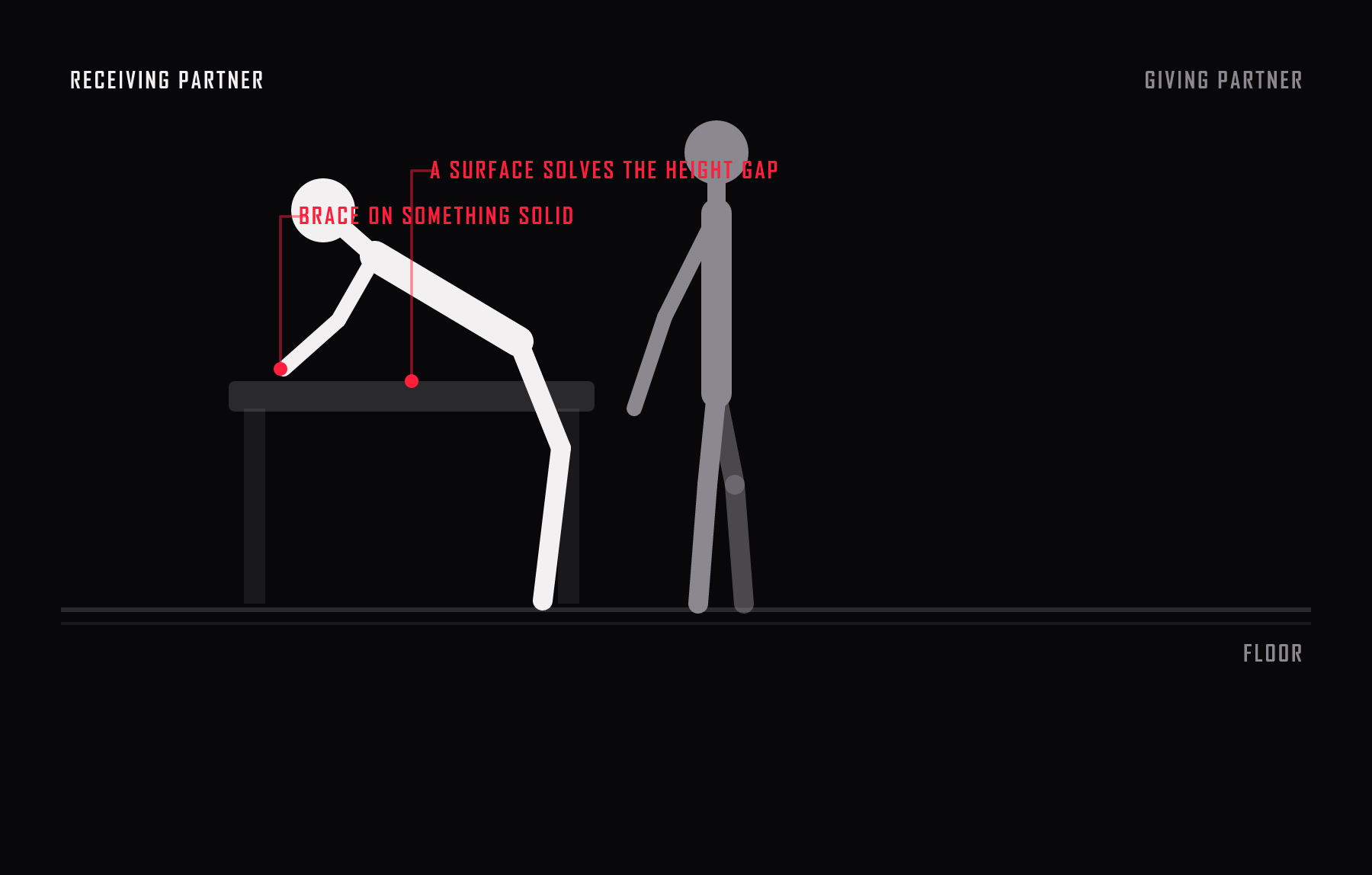
The second fix is leaning. The receiving partner bends forward and braces on a counter, a wall, a windowsill or the back of a chair. Leaning drops the hips and changes the angle, and bracing solves the balance problem at the same time.
The third is bending the knees, which works but tires quickly and is best treated as a temporary correction rather than the plan. For anything involving lifting, stand and carry covers the strength and safety side properly.
How is the height solved?
Slide it through the fixes, from easiest to most demanding.
How To ActuallyDo It
- 1
Pick a surface first
A counter, a dresser, a windowsill or the arm of a sofa. Deciding this before anything else saves the shuffling.
- 2
Solve the height
Elevate the shorter partner, or have the receiving partner lean forward. Do not try to fix it with effort.
- 3
Brace properly
Hands flat on something solid. Balance ends standing positions early more often than fatigue does.
- 4
Keep the stance wide
Feet apart gives a stable base. Narrow feet plus movement is how people end up on the floor.
- 5
Move to a surface when the legs go
Standing is a short-burst position. Ending up on the bed is the expected finish, not a failure.
ComfortAnd Balance
Balance fails before strength does. Wet floors, rugs that slide and awkward doorways cause more trouble than tired legs, and the shower is by some distance the riskiest place people attempt this. A mat and a firm handhold are not overcautious there.
The giving partner's lower back does most of the work in the leaning versions. Keeping the knees slightly bent rather than locked takes a surprising amount of strain off it.
Standing versions tend to be steeper and less forgiving than lying-down ones, so lube helps more than usual, and there is less opportunity to adjust gently once you are in position.
VersionsWorth Trying
The receiving partner leaning forward onto a counter or the edge of the bed is the most reliable standing version by a distance. It fixes height and balance together, and it is the one worth learning first.
Face-to-face standing with one leg lifted and hooked over the giving partner's hip opens the angle without needing a full lift. Bracing against a wall makes it manageable.
The full lift, with the receiving partner off the ground entirely, is the one everybody pictures. It needs genuine strength and a wall for support, and stand and carry is the page for it.
What is your standing position tonight?
Tap the mood.
WhoIt Is Best For
This suits couples close in height, or anyone willing to use a step or a counter without treating it as cheating. It is the natural choice for spontaneity, since it needs no bed and no setup at all.
It is a poor fit for long sessions, for large height differences left unsolved, and for anyone with back or knee trouble. The honest expectation is a few good minutes rather than a whole night, and planning the move to a surface in advance makes it better rather than less exciting.
What GoesWrong
Trying to solve the height by standing differently
The height gap is solved with a surface or a lean, not with technique. Picking the counter, dresser or windowsill before you start is the whole preparation.
Narrow feet
Feet apart gives a base. Narrow feet plus movement is how people end up off balance, and balance ends standing positions far more often than stamina does.
Taking it into the shower
Wet tile is where this goes wrong most often. Without a mat and a proper handhold it is not worth the risk it looks like it is worth.
Questions PeopleAsk
Why do standing sex positions never work?
Almost always a height mismatch. Two people standing rarely line up, and no amount of effort corrects it. Elevating the shorter partner a couple of inches, or having the receiving partner lean forward onto a surface, fixes most cases.
What is the easiest standing sex position?
The receiving partner leaning forward onto a counter, dresser or the edge of the bed, with the giving partner standing behind. It solves the height and the balance problem at the same time and needs no strength.
Are standing positions safe in the shower?
The shower is the most common place these go wrong, because wet tile offers no grip. A non-slip mat and a solid handhold make a real difference, and a leaning position is far safer there than an upright one.
How do you fix a big height difference?
Use elevation. A step, a low stool, a thick book or the edge of the bath under the shorter partner. Leaning forward onto a surface also drops the hips and works well with the same mismatch.
How long do standing positions last?
Not long, and that is normal. Nothing supports anyone's weight, so the legs and lower back set the limit. Treat them as a short opening rather than the whole session and plan where you are moving to next.