
Standing / Position Guide
Stand and CarrySex Position
Movies make it look effortless. The wall is doing the work.
Stand and Carry is the one everyone has seen in a movie. The giving partner lifts the receiving partner off the ground, who wraps their legs around the waist and holds on. In practice, it lasts about as long as a set of squats. That is not a failure. It is just what carrying another adult does to a pair of legs. The wall is what makes it possible at all.
Nobody is holding a full human weight on arm strength alone. Press the receiving partner against a wall and the wall carries most of the load. Suddenly the position goes from impossible to fun. Learn that one trick and the rest is timing.
What StandAnd Carry Is
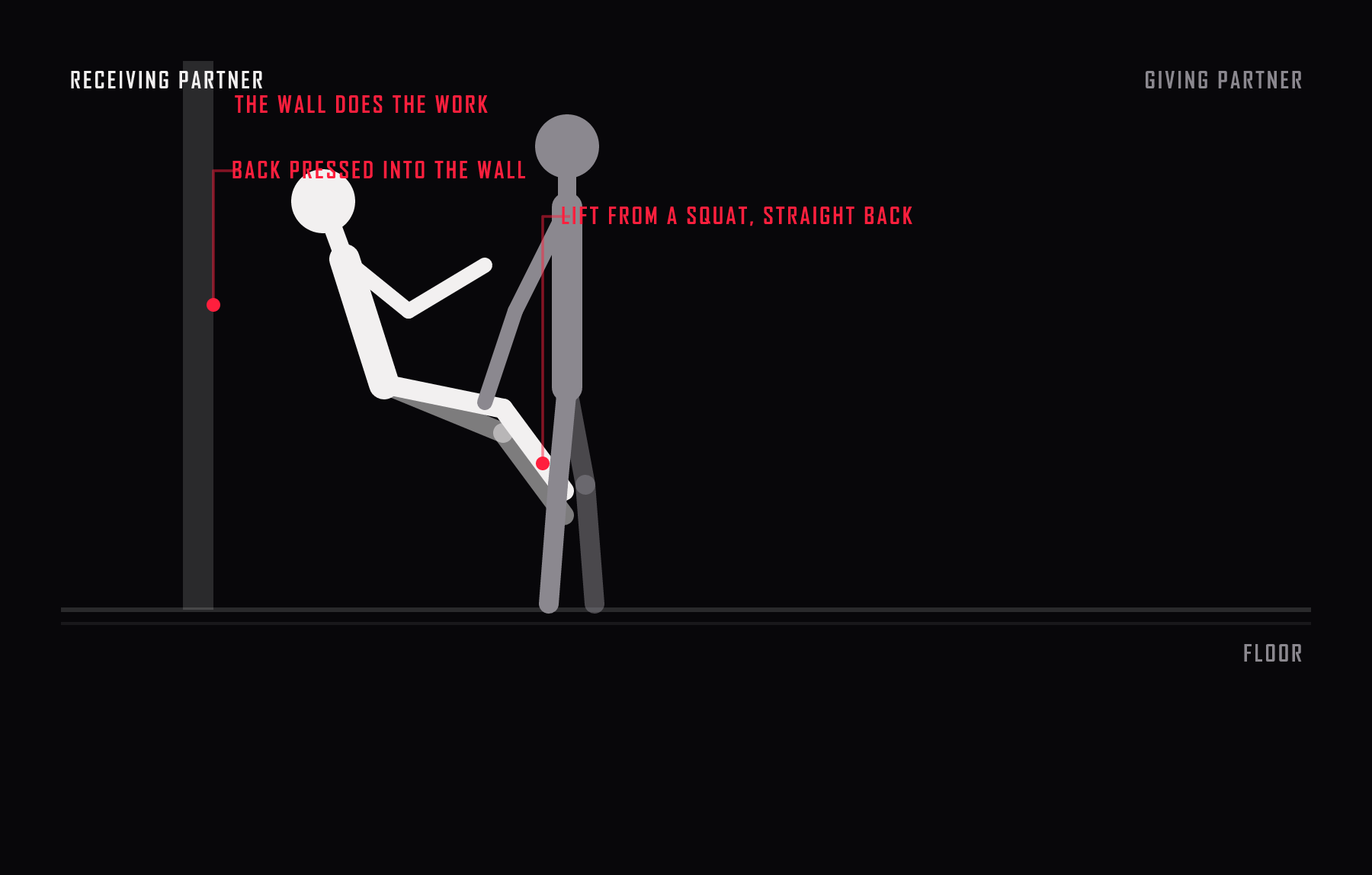
The giving partner stands and lifts. The receiving partner wraps the legs around the waist and links the ankles behind. Arms go around the neck or shoulders for balance. Then the pair moves to a wall, which is the part the movies always leave out.
It is the most physical entry on most position lists, and it is also the shortest. That is a fair trade. Nobody attempts this expecting a long slow night.
The Wall DoesThe Work
Against a wall, the math changes completely. The receiving partner's back rests on the wall, which supports most of the weight. The giving partner is holding position rather than holding a person. Those are very different jobs.
Get in close before lifting. Standing a foot away from the wall means the arms do everything, and they will not last. Chest to chest, with the wall at the back and the feet planted wide. That is the setup that works.
Bent knees help more than people expect. A slight squat puts the load on the legs instead of the lower back. Straight legs and a rounded back is how people hurt themselves showing off.
How much lifting is left?
Slide it to see how much weight you can hand off to walls and furniture. Less lifting means a much longer run.
HowTo Do It Safely
- 1
Pick the wall first
Choose a clear wall with nothing hanging on it and steady footing below. Do this before anyone is off the ground.
- 2
Start close
Stand chest to chest, right up against the wall. Distance from the wall is what makes this position fail.
- 3
Lift with the legs
Bend the knees and lift from a squat, with hands under the thighs. Keep the back straight the whole way up.
- 4
Press and settle
Push the receiving partner's back into the wall and let it hold the weight. Feet stay wide for a stable base.
- 5
Plan the landing
Come down before the shaking starts, not after. Lower with bent knees and let the feet find the floor first.
HarderThan It Looks
Time for honesty. A person is heavy. Even with the wall helping, most couples get thirty seconds to a couple of minutes before something starts shaking. That is normal, and it is not a comment on anyone's fitness.
The other thing nobody mentions is the entry itself. Lining up while holding someone in the air is awkward. It is much easier to start in another position and lift into this one, or to start seated on a counter and stand up from there. A little lube beforehand saves a lot of fumbling at the worst moment.
Bare feet on a rug beat socks on a wood floor. Slipping is the actual risk here, more than strength. Check the footing before anyone leaves the ground.
Easier VersionsTo Try
Sit the receiving partner on a counter or a dresser at the right height. The legs still wrap and the closeness is the same. Nobody is carrying anything. This is what most couples switch to after one honest attempt.
Try it in water if you have the option. Buoyancy removes most of the weight problem, and the wall of a pool works the same as a wall at home.
Use the stairs. The receiving partner stands two steps up, which erases the height gap and cuts the lift out entirely. If you want standing without the carrying, the London Bridge keeps everyone on solid ground.
What is your standing plan tonight?
Tap the mood.
Who ShouldAttempt It
This suits couples with a size and strength difference in the right direction, and it suits people who like a short burst of something intense. Anyone who lifts regularly will find it easier than anyone who does not.
Skip it if backs or knees are unhappy, or if there is no clear wall in the room. It is a moment, not a plan. Agree on the signal for coming down before you start, since the habit that makes a quick check-in easy also makes the landing safe. Beginners may get more out of a propped seated position first.
What GoesWrong
Lifting away from the wall
Distance from the wall is what turns this from a supported position into a deadlift. Chest to chest and right up against it before the lift, every time.
Lifting from a bent back
Bend the knees and lift from a squat with a straight back. This is the one position on the site where the injury risk is mostly to the person doing the lifting.
Waiting for the shaking
Come down early, while you still feel steady. Deciding to stop before you have to is much safer than discovering the limit while holding another person.
Questions PeopleAsk
What is the Stand and Carry sex position?
Stand and Carry is a standing position where the giving partner lifts the receiving partner off the ground. The receiving partner wraps the legs around the waist and holds on around the shoulders. A wall at the back makes it far easier to hold.
How strong do you need to be for Stand and Carry?
Stronger than most guides suggest, but the wall changes the answer. Without a wall you are carrying a full adult on your arms. With one, you are mostly holding position, which almost anyone can manage briefly.
How long does Stand and Carry last?
Usually well under two minutes, even for people who lift weights. Treat it as a short feature rather than the main event. Moving to a counter is the standard next step.
Is Stand and Carry easier than the London Bridge?
No. The London Bridge keeps both people supported on furniture or the floor. Stand and Carry asks one person to hold the other in the air, which is a different level of effort.
Does Stand and Carry work in the shower?
It can, and the water helps with the weight. The footing does not. Use a mat and a solid grab point, and go slower than you would on carpet.