
Props / Position Guide
Wedge PillowSex Positions
The angle everyone strains to hold, handed over to a piece of foam.
A wedge is a firm foam ramp that goes under the hips. That is the whole product, and the idea behind it is better than it sounds. Almost every position on this site improves when the pelvis is tilted, and almost all of them ask a person to produce that tilt and then hold it with their own muscles.
A wedge does the holding instead. This page is about using one properly rather than choosing which to buy, because placement is what decides whether a wedge transforms a position or sits in a cupboard being an expensive cushion.
What A WedgeActually Does
Tilting the pelvis changes the angle of entry, and a raised angle increases contact against the front wall. That is why a pillow under the hips is the highest value change in missionary, and why folded knee positions work at all.
The problem with producing that tilt with your body is that it is work. Folded knees stretch the hips, a bridge is a strength move, and both are on a clock. A wedge produces the same tilt indefinitely and asks nothing of anybody.
So a wedge is not really a position. It is a modification that applies to most of the position guides here, and the reason it earns its own page is that using it wrongly is common enough to have made a lot of people conclude the thing does nothing.
Placement IsThe Whole Thing
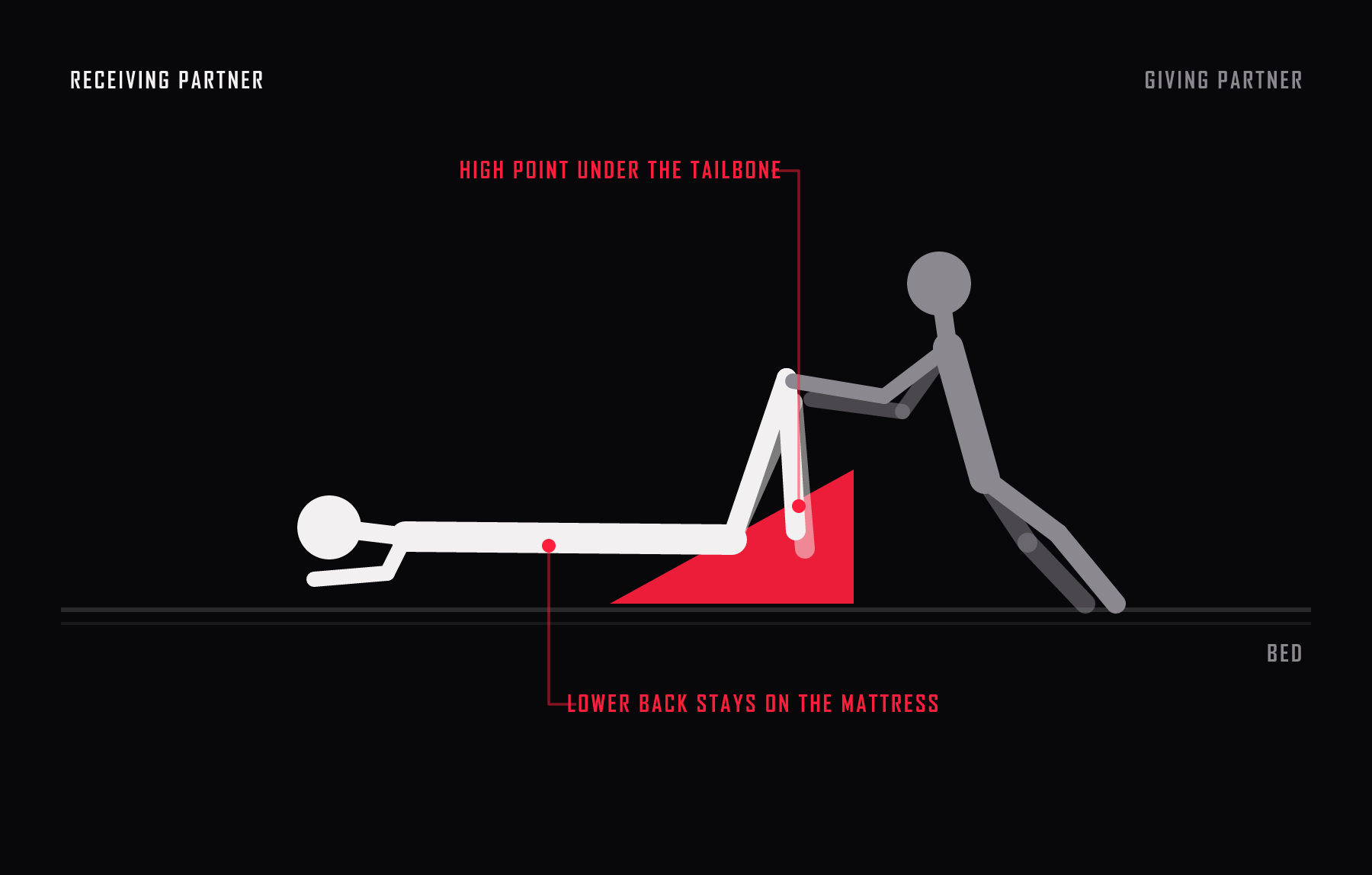
The wedge goes under the hips, not under the lower back. That is the mistake, and it is close to universal on the first attempt. Under the lower back it arches the spine, achieves very little tilt, and produces an ache that gets blamed on the position.
The high point of the ramp should sit roughly under the tailbone, with the slope running down toward the knees. The hips end up raised and tipped, the lower back stays supported by the mattress, and the tilt happens at the pelvis where it is wanted.
Firmness matters more than size. A soft pillow compresses under bodyweight within about a minute and quietly gives back everything it lifted, which is why stacked bed pillows disappoint. Foam that resists is the entire point of the object.
Where is the wedge sitting?
Slide it from wrong to right. The difference between these is why some people think wedges do nothing.
How To ActuallyDo It
- 1
Put it under the hips, not the back
If it is under the lower back it is in the wrong place. This single point is most of what there is to get right.
- 2
Find the tailbone
The high point of the ramp sits roughly under the tailbone with the slope running toward the knees.
- 3
Check the lower back is supported
The lower back should still be resting on the mattress rather than bridging a gap. A gap there is what causes the ache.
- 4
Try it in a position you already know
Use missionary first. You know what that feels like without a wedge, so the difference tells you whether the placement is right.
- 5
Adjust in small increments
An inch either way changes the angle noticeably. Move it a little and try again rather than repositioning wholesale.
ComfortAnd Long Sessions
Because nobody is holding anything, wedge positions run much longer than the versions they replace, and that changes what causes discomfort. Pressure points turn up instead of muscle fatigue, so a normal pillow under the head and one between or under the knees is worth arranging.
If the lower back aches with the wedge in place, it is almost always too far up the body. Slide it down toward the hips rather than removing it. The instinct to abandon the wedge when something hurts usually throws out the solution along with the problem.
Longer sessions mean friction builds gradually, so lube matters more than in short energetic positions. A wedge also holds a steeper angle than most people hold unaided, so start shallower than usual.
VersionsWorth Trying
Under the hips lying on the back is the standard use and the one to learn first. It turns plain missionary into the tilted version without anyone folding their knees or holding a pose.
Under the hips lying face down raises them into a rear entry angle while the receiving partner stays completely flat and relaxed. This is the version that makes flat positions work properly.
Under the hip in a side lying position tips the pelvis and solves the alignment problem that spooning starts with. A wedge under the chest also props the upper body for rear entry positions where the arms would otherwise be doing the work.
What are you using the wedge for?
Tap the mood.
WhoIt Is Best For
This suits anyone who likes tilted angles but does not want to hold them, which turns out to be almost everyone once they have tried both. It is particularly useful for couples where flexibility, hip mobility or lower back trouble rules out the folded knee positions entirely.
It is a poor fit if you dislike props in bed, and there is no argument against that. A firm cushion or a tightly folded blanket does most of the same job if you would rather not own a purpose built object. If a wedge seemed useless before, the placement is worth rechecking before writing it off.
What GoesWrong
Putting the wedge under the lower back
Under the hips, with the high point roughly under the tailbone. Under the lower back it arches the spine, and the resulting ache gets blamed on the position rather than the placement.
Using a soft pillow
Soft pillows compress under bodyweight and quietly undo the lift you set up. Firm is the whole reason a wedge works better than the cushions you already own.
Moving it in large jumps
An inch either way changes the angle noticeably. Small increments, tested in a position you already know well, beats hunting for the right spot from scratch.
Questions PeopleAsk
Where do you put a wedge pillow for sex?
Under the hips, with the high point roughly under the tailbone and the slope running down toward the knees. Not under the lower back, which is the common mistake and the reason wedges get written off as useless.
Why does a wedge pillow hurt my lower back?
Because it is too far up the body. In that position it arches the spine and leaves the lower back bridging a gap. Sliding it down toward the hips fixes it, and removing it throws away the solution along with the problem.
Can you use normal pillows instead of a wedge?
Up to a point. Soft pillows compress under bodyweight within about a minute and give back most of the lift. A tightly folded blanket or a firm cushion works far better than stacked bed pillows.
What positions does a wedge pillow improve most?
Anything that benefits from a tilted pelvis. Missionary gains the most, rear entry positions gain a great deal when the wedge goes under the hips face down, and side lying positions use it under the hip to fix their alignment problem.
Do you need to be flexible to use a wedge pillow?
No, and that is the point of it. A wedge produces the same tilt that folded knee positions ask your hips and hamstrings to produce, without any stretch or any effort, and it holds that tilt indefinitely.