
Mutual Oral / Position Guide
69Sex Position
Famous and symmetrical. Much fussier than the diagram suggests.
The 69 is the most recognizable position in the whole catalog, and one of the most often abandoned halfway through. Both partners lie head to toe so each can give oral to the other at the same time. On paper it is elegant and perfectly symmetrical. In practice you have two bodies of different lengths. They are trying to line up two areas that are rarely the same distance from the floor. That is the whole problem in one sentence.
None of this makes it a bad position. It means the setup matters more than usual, and that a few small adjustments turn it from awkward into genuinely comfortable. Anyone who gave up on the 69 probably gave up on a version that was never going to suit their bodies anyway.
WhatThe Layout Is
Both partners lie facing each other in opposite directions, so each person's head is near the other person's hips. That is the entire arrangement. There are three common versions. One partner lies on their back with the other on top. Both partners lie on their sides. One kneels above the other. The mechanics differ more than you would expect.
It is one of very few genuinely symmetrical entries in the position library. Most positions assign one person the active role. Here both people do the same thing at the same time. That sounds fair, and it is the source of nearly every complaint.
What ActuallyGoes Wrong
Torsos are not the same length. If one partner is noticeably taller, lining up both ends at once is simple geometry that does not cooperate. One person ends up stretching forward while the other tucks their chin, and neither is comfortable for long.
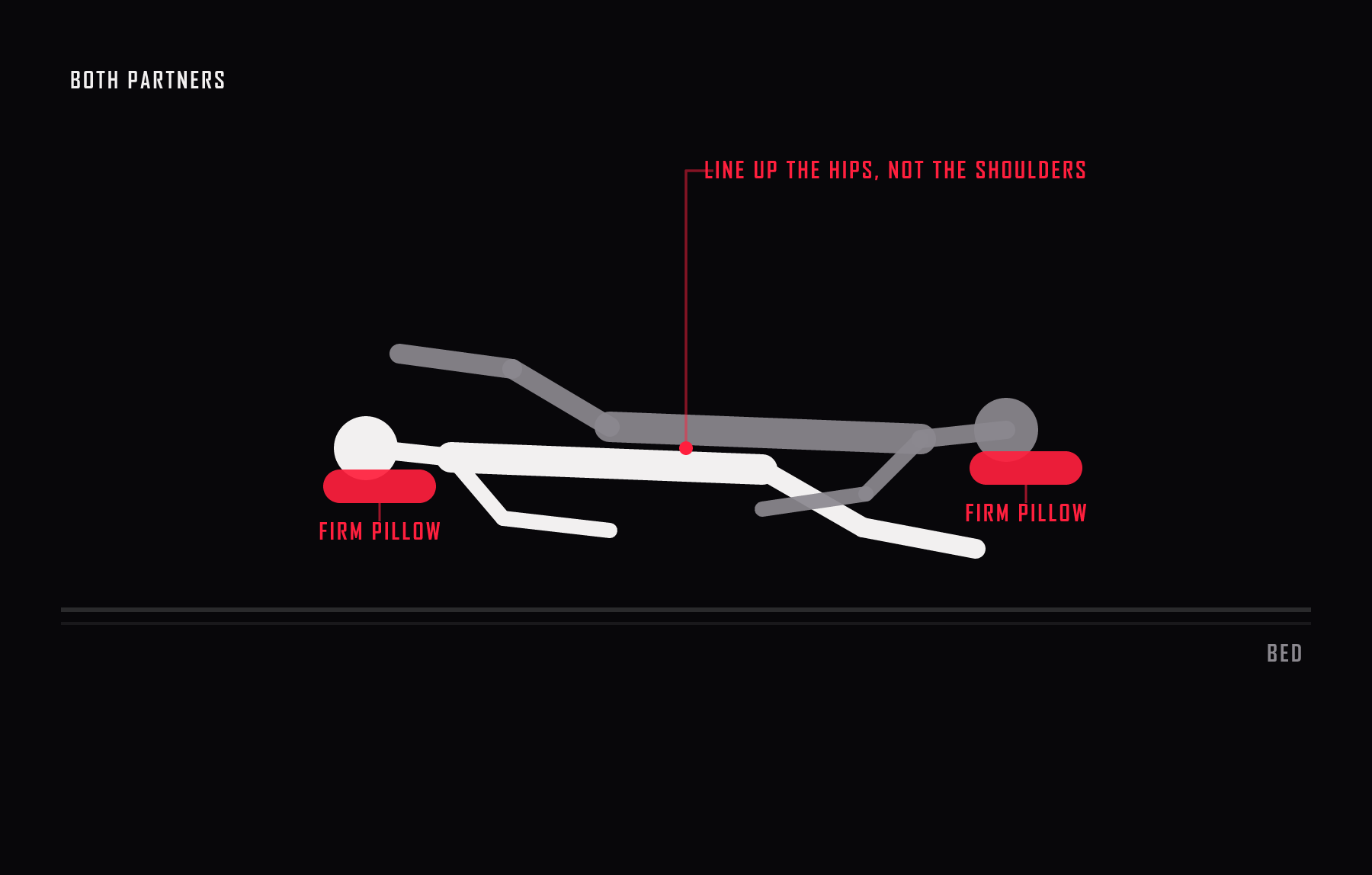
Pillows solve most of it. A cushion under the hips of the lower partner raises one end by a few inches. That is usually all the correction you need. Sliding one body slightly off to the side also helps more than people expect. Do not try to fix a height gap with neck reach, because that is exactly how the position ends early.
The neck is the next thing to complain. In the version with one partner on their back, that partner often lifts their head off the surface to reach. That is a sustained hold on muscles not built for it. Stack a firm pillow behind the head so it stays supported.
Jaws tire too, and there is no clever fix beyond taking breaks. Some couples keep a flavored option within arm's reach, and the lube roundup covers which types are worth having on the nightstand.
How much support do you need?
Slide from a flat setup to a fully propped one. More support means less neck work and a longer comfortable stretch.
How To ActuallyDo It
- 1
Gather pillows first
Grab two firm pillows before you start. Reaching for one mid-position is how the mood evaporates.
- 2
Choose your version
Decide between side-lying and one partner on top before you lie down. Side-lying is the safer default for a first attempt.
- 3
Line up the hips
Set the hips level with each other rather than the shoulders. Height differences live in the torso, so fix them at the hips.
- 4
Support both heads
Neither person should be holding their head up. If a neck is doing work, add a pillow before you go any further.
- 5
Trade the lead
Ease off in turns rather than both going flat out. Say so out loud if you want a moment to just receive.
Why Side-LyingWins
The side-by-side version fixes almost every structural problem at once. Nobody supports another person's weight and nobody has to hold their head up. Either partner can shift a few inches without renegotiating anything. It also removes the pressure question entirely, since neither partner is above the other.
The version with one partner on top gives that person more control of the angle. It also puts weight on the lower partner's chest, which makes breathing less pleasant over time. It works better for short stretches. If either of you tends to feel pinned, side-lying is the friendlier choice. It borrows the same easy horizontal logic as the slower face-to-face positions.
The kneeling-over version gives the best reach and the worst stability. Someone always ends up with a dead leg. Use it if it suits your proportions, but do not be surprised when you switch.
The AttentionProblem
Here is the honest difficulty, and it has nothing to do with anatomy. Doing something with focus while also receiving something with focus is hard. Attention splits and then it drifts. One side of the exchange usually goes on autopilot. Almost everybody experiences this and almost nobody says it out loud.
Some couples handle it by alternating in short waves, where one person eases off while the other takes the lead. Others use the 69 as a warm-up rather than a main course. Neither approach is wrong. It is worth actually saying out loud to each other. The talking about sex guide covers how to raise it without it landing as criticism.
What is your setup tonight?
Tap the mood.
WhoIt Is For
The 69 suits couples who like the idea of an even trade and who are not bothered by a bit of setup. It works best for partners of similar height, though pillows close most gaps. It also suits people who enjoy variety within a single session rather than settling into one thing.
Skip it if you find divided attention frustrating, or if a stiff neck is a regular visitor. Taking turns is not a lesser option, and for many long-term couples it is simply the better one. The positions that hold up over years tend to favor clarity over symmetry for exactly this reason.
What GoesWrong
Lining up the shoulders instead of the hips
Height differences get solved at the hip, not the shoulder. Line the shoulders up and one person spends the whole position reaching for something slightly out of range, which is the single most common reason 69 gets written off as awkward.
Holding your own head up
The neck fails long before anything else does. Two firm pillows gathered before you lie down, not hunted for halfway through, is the difference between a position you can stay in and one you abandon in two minutes.
Both going flat out at the same time
Attention splits badly here. Trading the lead, easing off while the other pushes, gets more out of it than both people working at full effort and each half noticing.
Questions PeopleAsk
What is the 69 sex position?
The 69 sex position has both partners lying head to toe so each can give oral to the other at the same time. It can be done side by side or with one partner on top. The name comes from the shape the two bodies make.
How do you do 69 with a height difference?
Put a cushion under the hips of the lower partner to raise one end by a few inches. Sliding one body slightly to the side also helps. Fix the gap with pillows rather than by stretching your neck forward.
Why does 69 hurt your neck?
Usually because one partner is holding their head off the surface to reach. That is a sustained hold on muscles that tire fast. A firm pillow behind the head solves it, and side-lying removes the problem entirely.
Is 69 better than taking turns?
It depends on how you handle divided attention. The 69 offers symmetry and a sense of an even trade, while taking turns lets each person focus completely. Many couples use the 69 as a short segment and then switch.
Which 69 position is most comfortable?
Side by side is the most comfortable for nearly everyone. Neither partner carries weight and neither has to lift their head. Small adjustments are easy. The version with one partner on top is better for reach but harder to sustain.