
On Top / Position Guide
CowgirlSex Position
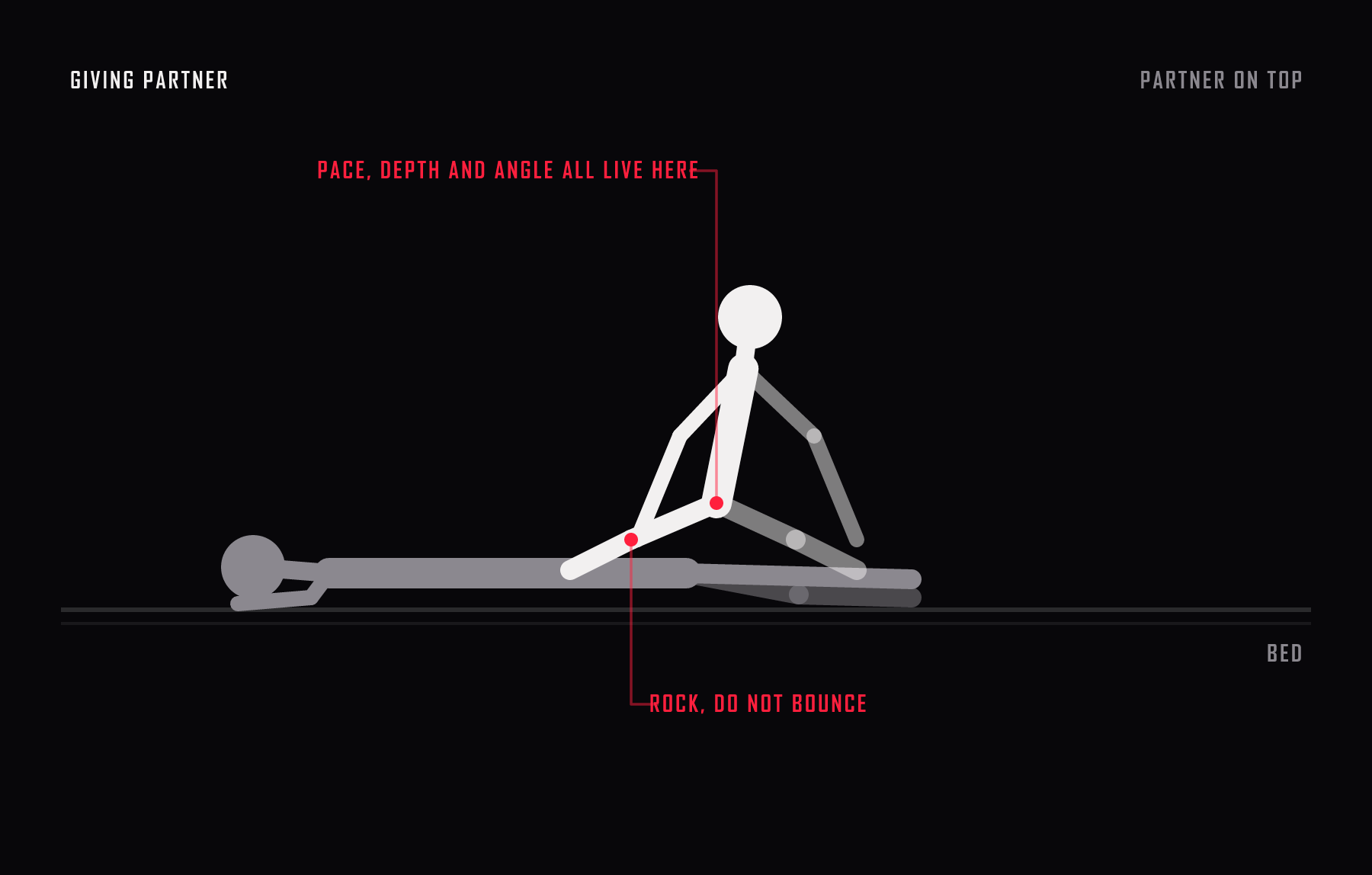
The partner on top holds pace, depth and angle all at once.
The cowgirl is the receiving partner on top, straddling and facing forward, while the other partner lies on their back. That one arrangement moves three controls to the same side of the bed. Pace, depth and angle all get decided by the person on top. Most positions split those between two people and quietly hope they agree.
It asks for no flexibility and no furniture. Sit, settle, and adjust from there. The learning curve is not about getting into it. It is about noticing that the small changes, especially how far forward you lean, matter far more than how fast anyone moves.
What TheCowgirl Is
The setup is as plain as it sounds. One partner lies on their back. The other straddles the hips with the knees down on either side, facing toward them. From there the person on top can sit upright, lean forward onto the chest, or lean back onto their hands. Each of those is a different position wearing the same name.
The movement is not a bounce. Most of the good version is a rock, with the hips traveling forward and back rather than straight up and down. Up and down is the version people picture and the version that burns out fastest. Rocking keeps contact constant and costs a fraction of the energy.
It sits near the top of every list of position guides because it solves a common problem. The partner who needs a particular angle can simply take it, without having to describe it out loud halfway through.
Why ControlChanges It
When one person holds pace and depth, the guesswork disappears. The partner on top can find the exact depth that works and stay there, which is much harder to arrange when somebody else is doing the moving.
That matters most for people who need a specific angle to get anywhere. Grinding forward puts steady pressure on the clitoris against the pubic bone, and that contact is the part most likely to be missing elsewhere. Cowgirl does not add it by accident. It makes it available on demand.
The trade is effort. The person on top is doing the work, and thighs tire sooner than anyone expects. That is a real limit rather than a character flaw, and the fix is leaning forward instead of pushing through. The same logic applied to the other side is covered in pacing.
How far do you lean?
Slide it to see how the lean changes contact and effort. Upright is deepest. Forward is easiest to hold.
How To ActuallyDo It
- 1
Get settled first
Straddle the hips with the knees down on either side and take a moment before moving. Comfort found now saves a correction later.
- 2
Find the angle before the pace
Rock slowly forward and back until one spot stands out. That spot is the position. Everything after it is repetition.
- 3
Rock, do not bounce
Move the hips forward and back rather than straight up and down. It keeps contact constant and costs far less energy.
- 4
Use the hands
Put them on the chest, the headboard, or the bed. Taking weight through the arms is what makes a long session possible.
- 5
Change the lean when the legs complain
Leaning forward is not giving up. It is the adjustment that lets the position carry on.
ComfortAnd Staying Power
The thighs and knees are the limit here, not flexibility. Kneeling on a soft mattress is kinder than a firm one, and a folded blanket under the knees removes most complaints. If the knees are the problem rather than the thighs, squatting with the feet flat shifts which muscles carry the load, though it is harder to balance.
The partner underneath is not a passive surface. Hands on the hips help steady the rhythm, and a small upward tilt of their pelvis changes the angle without anyone moving. Both people can adjust. Only one is steering.
Depth sits entirely with the person on top, which sounds safe and mostly is. The exception is the drop. Coming down harder than intended is the most common way this position goes wrong, and it is better known about in advance than discovered. A little lube keeps the early minutes from being the rough part.
VersionsWorth Trying
Reverse cowgirl turns the person on top to face the other way. The angle changes noticeably and the view is the selling point, but balance is worse and checking in is harder without eye contact. Treat it as a different position rather than the same one rotated. Leaning back from there, with the partner underneath holding the legs up and back, is the full nelson, which is an advanced extension and not a beginner move.
Leaning all the way forward onto the chest turns this into something closer to a grind, with effort dropping to almost nothing. Couples who like cowgirl in theory but find it tiring usually end up living here.
Squatting with the feet flat rather than kneeling gives the finest control over depth and the shortest comfortable window. For a version that keeps the closeness and removes the work entirely, spooning goes the opposite direction.
What is your cowgirl tonight?
Tap the mood.
WhoIt Is Best For
This suits couples where the receiving partner wants a particular angle and would rather take it than describe it. It is also the standard answer when one person wants to slow down and the other keeps speeding up, because pace stops being a negotiation.
It is a poor fit on nights when the person on top does not want to do the work, and there is nothing wrong with that. Knee trouble makes kneeling rough, though the forward lean solves most of it. If it has gone routine, a short rotation is more use than hunting for something exotic.
What GoesWrong
Bouncing instead of rocking
Straight up and down is the version that tires the legs out fastest and finds the least. Rocking the hips forward and back keeps contact and is where the angle actually lives.
Dropping down harder than intended
Depth belongs entirely to the partner on top, and the usual mistake is arriving at the bottom faster than planned. It is worth avoiding deliberately rather than hoping.
Waiting for the legs to give out before leaning forward
Leaning forward is not giving up, it is the adjustment that makes the position last. Making it early, while there is still something in the thighs, is the whole difference.
Questions PeopleAsk
What is the cowgirl sex position?
Cowgirl is a position where the receiving partner sits on top, straddling and facing their partner, who lies on their back. The partner on top controls pace, depth and angle at the same time.
Why does cowgirl get tiring so quickly?
Because most people bounce rather than rock. Moving the hips forward and back instead of up and down keeps the contact and uses far less energy. Leaning forward onto the hands or chest also shifts the work off the thighs.
What is the difference between cowgirl and reverse cowgirl?
The direction the partner on top faces. Cowgirl faces toward their partner, which keeps eye contact and balance. Reverse cowgirl faces away, which changes the angle but makes balance and checking in harder.
Is cowgirl good for reaching orgasm?
It can be, because grinding forward puts steady pressure on the clitoris against the pubic bone. That contact is the part missing from many other positions, and here it is available on demand rather than by luck.
How do you make cowgirl more comfortable on the knees?
Put a folded blanket or pillow under the knees and lean forward so the arms take some of the weight. Squatting with the feet flat is another option, though it is harder to balance and harder to hold.