
Seated / Position Guide
SpiderSex Position
The only position where both people are equally responsible for the movement.
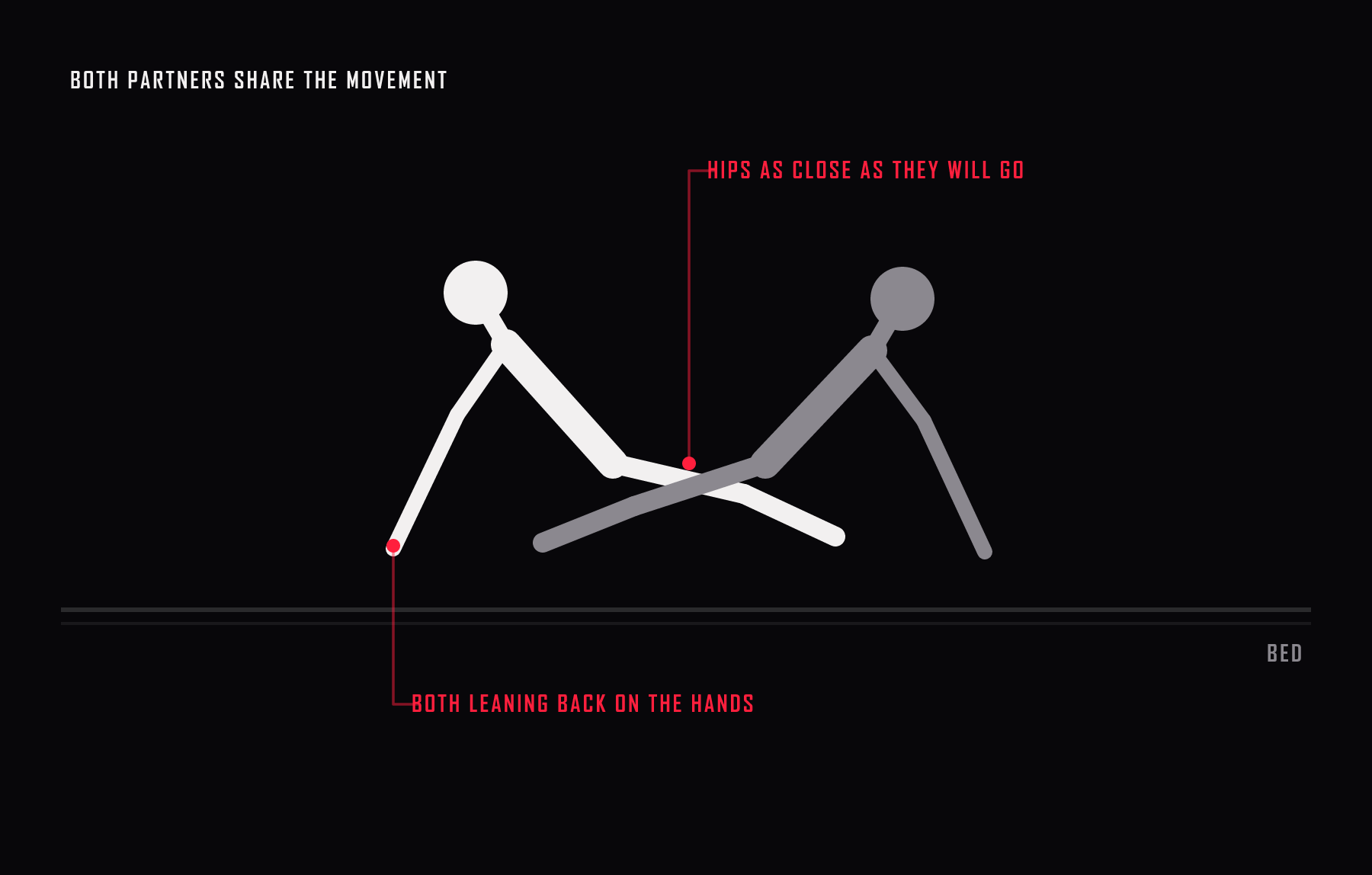
The spider has both partners seated facing each other, legs interlaced, each leaning back on their hands. From a distance it looks like a puzzle. Up close it is one of the most evenly balanced positions there is, and that balance is the whole point of it.
Most positions have someone doing the moving. This one does not, and that is why the first attempt usually feels strange. Both people wait for the other to lead, nothing much happens, and everyone concludes the position does not work. It does. It just requires giving up the idea that one of you is driving.
What TheSpider Is
Both partners sit facing each other. The receiving partner's legs go over the giving partner's thighs, the giving partner's legs go under, and the two sets interlace so the hips end up close together. Both people lean back and take their weight on their hands behind them.
The movement is a rock rather than a thrust, and it comes from both sets of hips at once. Small movements do more here than large ones, and trying to make it energetic is the fastest way to lose the alignment entirely.
It sits in the middle of most lists of position guides as an oddity, which underrates it. The shallow angle and constant grinding contact make it far better suited to slow evenings than its diagram suggests.
Why NobodyLeads
In almost every other position one person supplies the movement and the other receives it. Here both people are leaning back on their hands with their hips free, which means either can move and neither has to. That symmetry is genuinely unusual.
The awkward first attempt comes from both partners politely waiting. The fix is not technique, it is agreeing out loud that you are both moving, then starting small and letting a rhythm arrive rather than setting one.
Once that clicks, the position does something few others manage. Neither partner can go faster than the other will allow, because the movement is a negotiation happening continuously. If pace is usually a point of friction between you, this position settles it structurally rather than through conversation.
How far back are you leaning?
Slide it to see how the lean changes contact and stability. Further back opens the angle and costs your arms.
How To ActuallyDo It
- 1
Sit facing each other and get close
Hips as close together as they will go before the legs interlace. Most failed attempts start too far apart to reach.
- 2
Interlace the legs
One partner's legs over the thighs, the other's underneath. Take a moment to get this comfortable rather than settling for approximately right.
- 3
Lean back onto your hands
Both of you, together. Hands flat behind you, elbows soft rather than locked.
- 4
Agree that you are both moving
Say it out loud. This is the step that stops the polite stalemate where each of you waits for the other.
- 5
Start small and let a rhythm arrive
Rock rather than thrust. Big movements lose the alignment, and finding it again takes longer than it took to lose.
ComfortAnd Your Arms
Arms and wrists set the limit here, since both of you are propped on them. Cushions behind each person to lean back onto turn this from a ten minute position into a much longer one, and there is no reason to be purist about it.
Interlacing legs puts a mild stretch on the hips for both people. It should be comfortable rather than something to endure, and shifting which legs go over and under can change it entirely.
The angle is shallow, so this is a grinding position rather than a deep one. That means friction rather than depth is what eventually ends it, and lube helps more here than the gentle appearance suggests.
VersionsWorth Trying
Both partners on their elbows rather than their hands lowers everyone, opens the angle and takes the strain off the wrists. Most couples end up here without deciding to. Lie all the way back with the legs still interlocked and you are close to the scissor, which keeps the grind and takes the arms out of it completely.
One partner sitting fully upright while the other leans back tips the balance, so whoever is upright can use their hands. It is the version to use when the shared control has served its purpose.
Piling cushions behind both of you turns this into a genuinely restful position that can run for a long time. For a seated position with more depth and less negotiation, the CEO keeps the eye contact and hands control to one side.
What is your spider tonight?
Tap the mood.
WhoIt Is Best For
This suits couples who like slow, and couples where pace is usually a point of friction, because here neither person can run away with it. The constant eye contact and the free conversation make it a good position for a night that is not in a hurry.
It is a poor fit when either of you wants depth or intensity, since it offers neither. Wrist trouble argues for the elbow version or cushions. If the first attempt felt like a stalemate, that is the normal first attempt rather than a verdict on the position.
What GoesWrong
The polite stalemate
Both people wait for the other to lead and nothing happens. Saying out loud that you are both moving is a real step in this position, and it is the one that is easiest to skip.
Locking the elbows
Both partners are propped on their arms for the whole position. Soft elbows and cushions behind you before the wrists complain is what makes the long unhurried version possible.
Going big to compensate
Big movements lose the alignment that took a minute to find. Rocking rather than thrusting is how the rhythm actually arrives.
Questions PeopleAsk
What is the spider sex position?
The spider has both partners seated facing each other with their legs interlaced and both leaning back on their hands. The hips end up close together and both people share the movement equally.
Why does the spider position feel awkward at first?
Because both partners are waiting for the other to lead. Neither person has to move, so often neither does. Agreeing out loud that you are both moving, then starting small, is what fixes it.
Is the spider position deep?
No. The angle is shallow and the movement is a rock rather than a thrust, which makes it a grinding position rather than a deep one. That is a feature on a slow night and a limitation on a fast one.
How do you stop your arms getting tired in the spider position?
Put cushions behind both of you to lean back onto, or come down onto your elbows instead of your hands. Arms are the only real limit in this position, and both fixes remove it.
How do you get the legs right in the spider position?
One partner's legs go over the other's thighs and the other's go underneath, with hips as close as they will comfortably go. Getting properly close before interlacing matters more than the exact arrangement of the legs.