Rear Entry / Position Guide
Bull DriverSex Position
Same angle as doggy. Completely different physics.
The bull driver takes standard rear entry and flips the direction of force. Instead of the partner behind pushing forward into the receiver, they lean back and hold the receiver's arms or shoulders, pulling instead. The receiver ends up with their chest lifted and their weight shared between their knees and that grip. It feels nothing like doggy style even though the setup looks almost identical from across the room.
It is a leverage position first and a depth position second. Get the grip right and the whole thing holds itself together. Get it wrong and someone ends up with a sore shoulder in the morning, which is not the outcome anyone signed up for. Grip is the skill worth practicing here, more than pace or angle.
What MakesIt Different
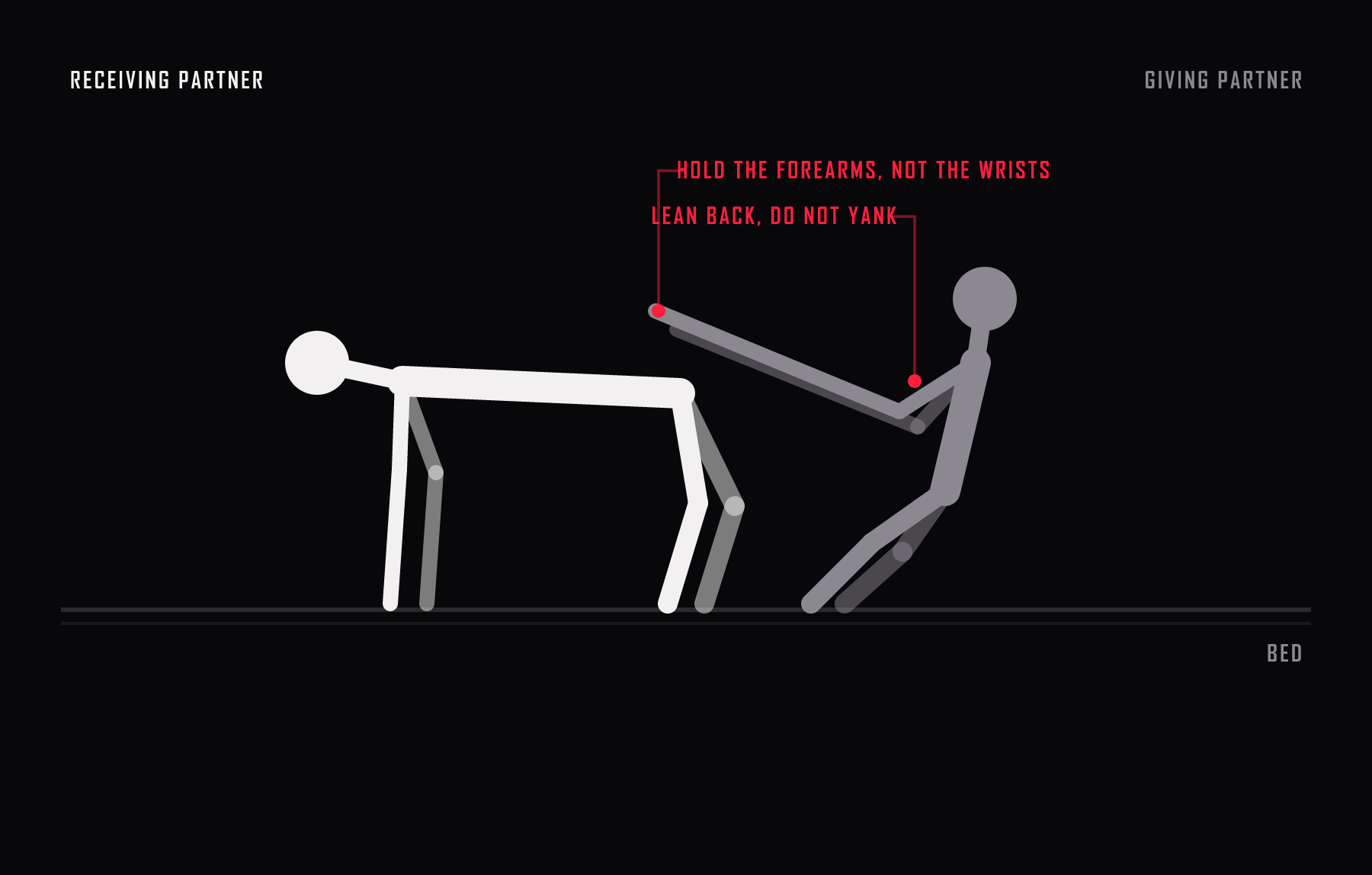
Start with the receiver on hands and knees, then have them lift their hands off the floor. The partner behind kneels upright and takes hold of the receiver's forearms. From there they lean their own weight backward. The receiver's upper body is now suspended, held by that grip alone.
That single change rewrites the mechanics. In ordinary rear entry the pushing partner drives forward and the receiver braces. Here the force runs the other way, and the receiver is drawn back rather than pushed. Compared with most of the rear entry family, the bull driver is the one that depends entirely on tension between two bodies. The triceratops is its upright kneeling cousin, with the receiver kneeling tall and held at the forearms rather than suspended.
Why PullingBeats Pushing
Pushing wastes energy. When you thrust forward, the receiver absorbs it through their arms. Much of the motion ends up as wobble in the mattress. Pulling turns the receiver's own body weight into part of the movement. The partner behind leans back and the receiver travels toward them. The return happens almost on its own.
The angle also changes. With the chest lifted, the receiver's lower back arches and the hips tip, which opens up depth without anyone working harder. If you like that arched angle but want the receiver's hands back down, the rhino position gets there another way. It drops the chest instead of lifting it.
How much pull do you want?
Slide from a light hold to a full backward lean. More tension means more depth and more demand on the shoulders.
How To ActuallyDo It
- 1
Set the base
The receiver kneels with knees about hip width apart on something padded. Stability comes from the knees, so give them room.
- 2
Kneel upright behind
The partner behind kneels tall rather than crouching. Sitting too far back at the start makes the first grip awkward.
- 3
Take the forearms
Hold just below the elbow, one arm in each hand. Keep the receiver's elbows below shoulder height the whole time.
- 4
Lean, do not yank
Shift weight backward slowly until the tension feels even. The receiver's chest should lift on its own without any pulling on the joints.
- 5
Find the rhythm
Let the lean drive the movement instead of thrusting. Release the grip every minute or so and check how the shoulders feel.
GripWithout Strain
Here is the honest warning. Pulling on a shoulder is a real strain, and shoulders do not enjoy being loaded at odd angles. Hold the forearms rather than the wrists or the hands, and keep the receiver's elbows below shoulder height. Arms pulled up and back behind the head is the one variation to skip.
Grip should be firm and steady rather than sharp. No yanking, no sudden jerks at the end of a stroke. Think of it as a rope going taut, not a tug of war. The receiver should be able to say stop and feel the tension release at once. Agree on that before you start rather than mid-position.
Knees also take a beating in this one, since the receiver is anchored in place. A folded blanket underneath is worth the ten seconds it takes. A slick start from a well-chosen lube keeps the first few strokes from being the roughest.
VariationsTo Steal
Swap the arms for the shoulders. Instead of holding the forearms, the partner behind cups the front of the receiver's shoulders and pulls from there. It spreads the load across a wider area and feels less like being held captive, if that matters to you.
Try one arm only. The receiver keeps one hand on the bed for balance and gives up the other. This halves the tension and makes the whole thing far easier to hold for more than a couple of minutes.
Go the other way and add a hip grip instead. Hands on the hips with a backward lean gives you a similar pull without touching the arms at all. It is a good middle ground if you want the leverage without the commitment. It also sits close to the pearly gates, where the receiver leans back into the partner rather than away.
What is your grip tonight?
Tap the mood.
WhoIt Suits
This is for couples who like a bit of controlled force and have the shoulder mobility to enjoy it. The partner behind needs a decent core, because leaning back while holding another person is more of a workout than it looks. The receiver needs to be genuinely comfortable giving up their hands.
It is a poor fit for cranky shoulders. It is also wrong if the receiver dislikes being held in place. In that case the flat and heavy option is friendlier. Lying fully prone in the prone position gives you the same closeness with none of the pulling.
What GoesWrong
Holding the wrists
Wrists are the wrong place to take hold. Forearms just below the elbow spread the load across a joint built for it, and keeping the elbows below shoulder height keeps the shoulders out of trouble.
Pulling rather than leaning
The lean drives the movement. Yanking replaces a steady, even tension with a series of jolts the receiver cannot brace for, and it is the fastest way to turn a good grip into a strained shoulder.
Leaving the knees unpadded
The receiver stays anchored in one spot for the whole position, which is different from doggy where the weight shifts. Whatever is under the knees is under them the entire time.
Questions PeopleAsk
What is the bull driver sex position?
The bull driver is a rear entry position where the partner behind leans back and holds the receiver's arms or shoulders. The receiver's chest lifts off the bed and their weight is shared between their knees and that grip. The movement comes from pulling rather than thrusting.
Is the bull driver hard on your shoulders?
It can be if the grip is wrong. Hold the forearms rather than the hands and keep the elbows below shoulder height. Never pull the arms up behind the head. Steady tension is fine, but sudden jerking is what causes trouble.
Bull driver or doggy style, what is the difference?
The setup looks the same but the force runs in opposite directions. Doggy style involves pushing forward while the receiver braces, and the bull driver involves pulling backward while the receiver hangs from the grip. The bull driver goes deeper with less effort.
Do you need to be strong to do the bull driver?
The partner behind needs a reasonably solid core, because leaning back while supporting someone else is more work than it looks. The receiver needs shoulder mobility more than strength. Neither of you needs to be an athlete.
How do you make the bull driver more comfortable?
Put a folded blanket under the receiver's knees and swap the forearm grip for a shoulder hold. Dropping to one arm instead of two also cuts the strain considerably. Shorter stretches with a release in between beat one long hold.