
Face To Face / Technique Guide
Coital AlignmentTechnique
Plain old missionary, rebuilt around contact instead of thrust.
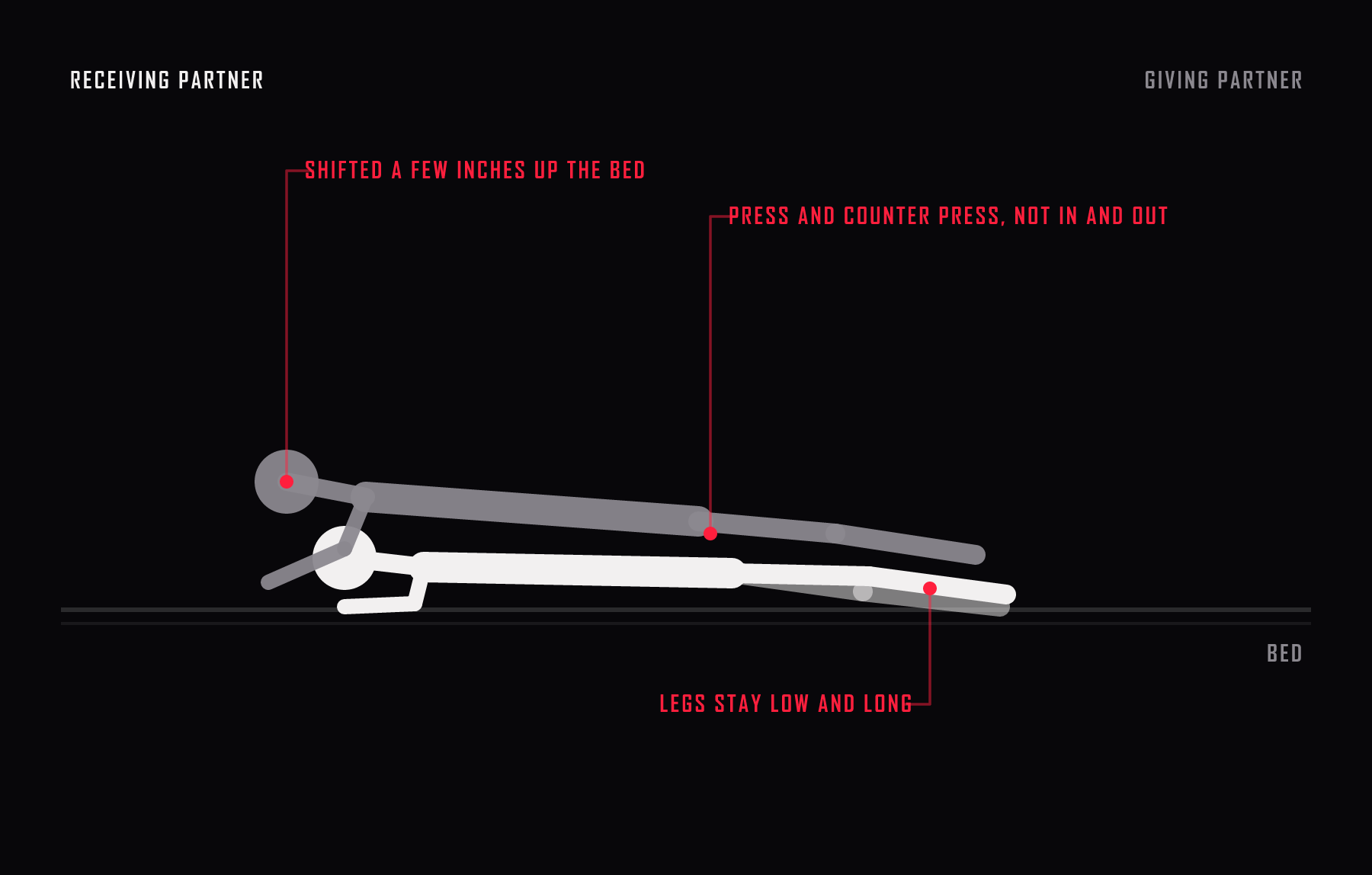
The coital alignment technique takes missionary and nudges the top partner higher by a few inches, until the two pelvises meet and keep meeting. Then the motion changes too. Nobody pulls back and drives in; the pair rock against each other instead, handing pressure back and forth.
People shorten it to CAT. Its reputation splits down the middle, a revelation for some couples and a shrug for others, and the gap is usually patience. The first tries can feel like almost nothing is going on, because the payoff is constant contact rather than visible motion. Give it time. Once the rhythm lands, you stop thinking of it as a technique.
What The CoitalAlignment Technique Is
Begin from ordinary missionary. Three adjustments turn it into CAT. First, the top partner shifts their entire body a few inches toward the headboard, parking their pelvis higher than it normally sits. That move has a name: riding high. Now the base of the penis, or the pubic bone, rests against the clitoris rather than sliding past underneath.
Second, the top partner drops off locked arms. A bigger share of their chest settles onto the person below, though bent elbows go on carrying part of it. Third, whoever is underneath keeps both legs lower and flatter than usual (the ankles often end up hooked lightly over the top partner's calves).
So the CAT position (or cat sex position, as it often gets typed) is not really a new shape. It is plain missionary tuned for contact. That is exactly why so many couples get it almost right and still miss what it is for.
Why ContactBeats Depth
Regular thrusting is built around distance. In, out, repeat. Trouble is, the clitoris sits above that line of travel, so any given stroke brushes it for a moment or skips it entirely. Most people with a clitoris need that spot stimulated directly, and a standard stroke mostly sails right past.
Riding high lifts the point of contact to the place that matters. Rocking, instead of thrusting, stops that contact from breaking every other second. What you give up is depth. A deliberate trade: penetration stays shallow, and pressure carries the load.
Picture a slow seesaw. The top partner pushes forward and down, the bottom partner pushes up and back, and the pressure shuttles between them. None of it is fast. Tiny movements at an easy pace tend to stretch a session out, a bonus for anyone hoping to last longer.
What The ResearchActually Shows
Why would anyone need a technique for this? Blame a gap. When Frederick and colleagues put questions to 52,588 US adults in 2018, sixty five percent of the heterosexual women said orgasm with a familiar partner happened usually or always; among heterosexual men, that figure reached ninety five percent. Our female orgasm guide explains why the gap comes down to technique and time, not anatomy.
The name dates to 1988, when Eichel, De Simone Eichel and Kule first described the method. Their questionnaires went to 43 people taught the technique and 43 without it, and knowing it went along with female orgasm happening more often, plus more simultaneous orgasm. It was also a small, self selected comparison rather than a trial.
Something sturdier arrived seven years later. Hurlbert and Apt took 36 married women and their spouses and split them at random between two workshops, one on CAT (19 women) and one on directed masturbation (17 women). Both groups got better on three counts: how reliably orgasm happened during intercourse, how strong it felt, and how many there were. Only on that first measure did the groups pull apart, with CAT somewhat ahead.
In 2000, Pierce gathered the existing studies into a review. Frankly, the evidence is thin and dated, and the big modern trials that could settle the question have never been run. Still, the mechanism makes sense, and the early numbers lean the right way. Worth trying. Not a guarantee.
How high do you ride?
Drag the slider and watch what riding higher changes.
How To ActuallyDo It
- 1
Get inside, then shift upward
After entry, the top partner inches their whole body toward the headboard without pulling back. Penetration turns shallower. Good: that means it is working.
- 2
Lower the chest
Let the chest settle against your partner while bent elbows keep holding some of the load. Can the person underneath still breathe fully? Then the weight is right.
- 3
Keep the legs long
Underneath, let both legs straighten out and rest the ankles on the calves above. Knees pulled up high tip the hips away from the very contact you are after.
- 4
Push, then push back
On top, press forward and a little downward. Underneath, reply with a press up and back. Neither movement covers more than an inch or two.
- 5
Resist speeding up at the end
As things start building, stay with that same slow exchange. Nothing breaks the contact faster than speed.
Breathing RoomAnd Weight
Joints get an easy night here. No knee, hip, wrist or back carries much, and nobody holds a stretch. Breath and weight are what need managing, and both mostly concern the partner underneath.
Riding high means letting more weight down than plain missionary would, and that is partly how the pressure stays even. So keep the elbows bent and doing some of the carrying, and angle your chest slightly off to one side, which leaves the person below room to fill their lungs. If they cannot? Too much. Air beats alignment every time.
Small, constant pressure can make tissue sore in a way long strokes rarely do, and the remedy is simple: some lube, a softer press, or both.
VersionsWorth Trying
Slip a thin pillow beneath the bottom partner's hips and their pelvis rises to meet the one above. Thin matters. A chunky wedge tips everything toward depth, which defeats the purpose.
Tuck a hand or a small vibrator between your bodies. The alignment pins it where it needs to be, so no one is aiming and no one is cranking an arm at a strange angle.
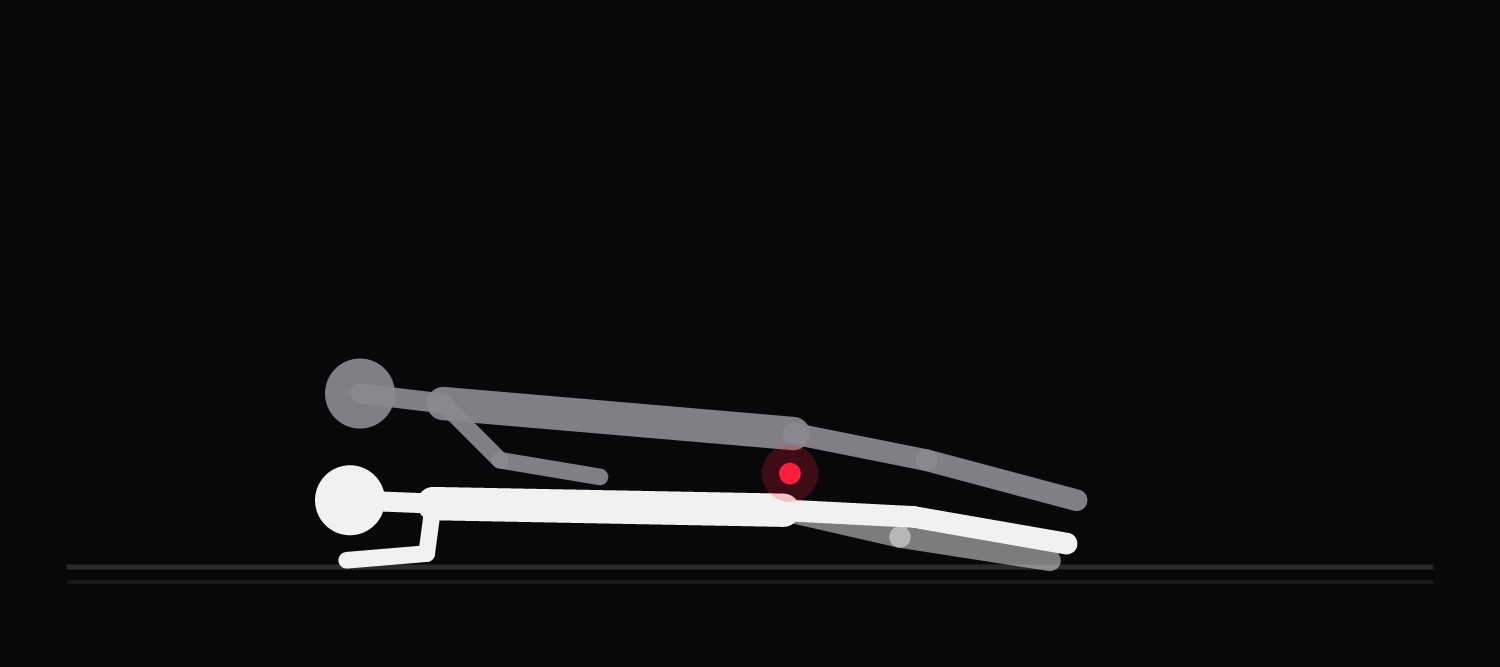
Rather nobody held anybody up? Do it on your sides. Face each other, weave your legs together and rock the pelvises into one another, much like the sideways position. Shallower again, and easy to sustain.
Or swap roles. Put the former bottom partner on top, doing the grinding, and you get something near a forward leaning cowgirl running on CAT's rhythm.
The versions, drawn

A thin pillow under the hips
It raises the pelvis to meet the partner above. Thin on purpose, because a thick wedge tips it back toward depth.
Side lying
Face to face on your sides with the legs woven together. The same pressure and the same rock, with nobody carrying weight.

Swap who is on top
The partner who was underneath takes the top and does the same grind, close to a forward leaning cowgirl.
What is your CAT tonight?
Tap the mood.
WhoIt Is Best For
The ideal couple for this? Intercourse feels good, yet it seldom gets the partner with a clitoris all the way there, and both of you would sooner tweak the position than tack an extra step onto the routine. Slow nights suit it. So do long sessions, and anyone who loves full body contact.
Skip it if depth is the whole appeal, or if either of you hates being pressed close under real weight. A large height gap complicates things too, because riding high pushes faces out of line. Expect to talk during the first few tries. That goes easier when saying what is working already feels normal between you.
What GoesWrong
Riding high, then thrusting anyway
Moving up only pays off when the motion changes as well. Long strokes from up there drag contact on and off the clitoris, and what you have is missionary with worse leverage.
Giving up after one night
Early tries feel flat because the pressure never had time to build. Call night one calibration, and give the rhythm a few more sessions before judging.
Overshooting and slipping out
Go too far up and the angle stops holding, so penetration keeps ending. Work back down an inch at a time until the pelvises meet and stay that way.
Questions PeopleAsk
How does the coital alignment technique work?
It adjusts missionary so the top partner sits a few inches further up, lining up the pelvises and giving the clitoris steady contact. Rather than thrusting, both people rock into each other and pass pressure back and forth.
Is it called the clitoral alignment technique?
No, though the mix up is common. The correct name is coital alignment, which refers to how bodies line up during intercourse. Mind you, keeping the clitoris in contact is precisely what that alignment is for.
Coital alignment technique vs missionary: what is the difference?
Missionary runs on in and out movement with level hips, and that rewards depth. CAT lifts the top partner higher, lowers the bottom partner's legs and swaps thrusting for rocking, and that rewards contact.
How do you learn to do the CAT technique?
Nail the alignment first. After that, practice the slow exchange of pressure without chasing a result. Talk about where contact is landing, and expect the rhythm to click after a few sessions, not on the very first one.
Does CAT actually work?
The evidence is limited and old, though it leans in a helpful direction. A 1988 comparison tied it to more frequent female orgasm. A 1995 randomized study found that CAT and directed masturbation both helped, and CAT did somewhat better on orgasm consistency during intercourse.