Advanced / Position Guide
Upside DownSex Position
Chase the head rush, not the depth. The depth is available in easier positions.
The upside down position has the receiving partner inverted, shoulders and upper back on the bed, hips above them and legs overhead, while the giving partner works from above. It is a close relative of the piledriver and it is one of the most demanding things on this site.
Almost every guide sells it on depth, which is the wrong pitch. Depth is available in half a dozen easier positions that do not involve anybody standing on their shoulders. What is not available anywhere else is the inversion itself, and once you accept that is the point, you stop trying to make it last and start doing it properly.
What UpsideDown Is
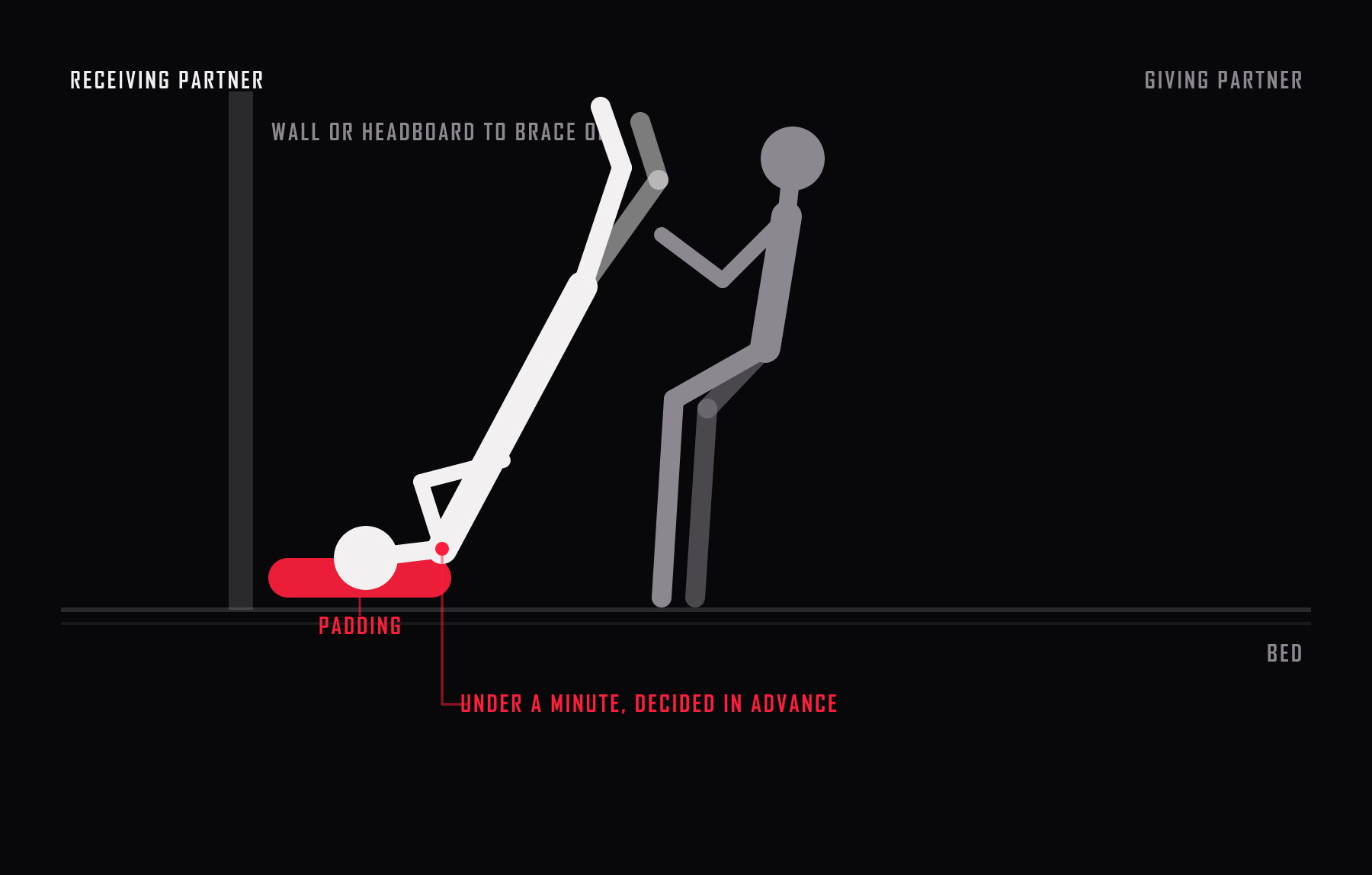
The receiving partner lies on their back and rolls their hips up over their shoulders, so the weight rests across the shoulders and upper back with the legs folded overhead. The giving partner kneels or crouches above and comes down from over the top.
It is a supported shoulder stand with somebody else involved. The neck is not meant to be carrying the load. Weight belongs on the shoulders and upper back, and if it is on the neck, the position is set up wrong.
It sits at the far end of every list of position guides, and unlike most entries there it is not simply difficult. It genuinely is not for everyone, and that is a matter of blood pressure rather than enthusiasm.
Why The InversionIs The Appeal
Being upside down raises blood pressure in the head and changes what everything feels like. That is the actual product here. It is lightheaded, disorientating and quite unlike anything else, and people who like this position are usually describing that rather than the angle.
Understanding this changes the approach. If depth were the point, you would want the position to last. Since the inversion is the point, and the inversion is also what limits the time, the correct plan is short, deliberate and unhurried in setup rather than long.
It also explains the exit. Coming down fast from an inverted position after your blood pressure has adjusted is how people get dizzy on their feet afterwards. Come down slowly and sit for a moment. The bridge and the wheelbarrow share the short honest limit for different reasons.
How inverted is it?
Slide it from barely tilted to fully overhead. Further is more intense and considerably shorter.
How To ActuallyDo It
- 1
Check this is for you first
Anyone with high or low blood pressure, glaucoma or eye pressure issues, or neck or back trouble should skip this one entirely rather than trying it carefully.
- 2
Get the weight onto the shoulders
Weight rests on the shoulders and upper back, never the neck. If you feel it in the neck, come down and reset rather than adjusting from there.
- 3
Use a wall or a headboard
Something to brace against removes the balance problem, which is the difference between a controlled position and a collapse.
- 4
Set a very short window
Under a minute. Decide that before starting, because judging it from inside an inversion is unreliable.
- 5
Come down slowly and sit still
Lower deliberately, then stay put for a moment before standing. Getting up quickly afterwards is what makes people dizzy.
ComfortAnd Knowing When To Stop
The neck is the thing that matters most. It should be doing nothing. Weight belongs across the shoulders and the upper back, and a folded towel under the shoulders helps keep the neck in a neutral line rather than compressed.
Lightheadedness is expected here, which makes it a poor warning signal. The reliable signals are different. Pressure behind the eyes, ringing ears, tingling in the hands, or any feeling that the neck rather than the shoulders is loaded all mean come down now.
Lube and a shallow start matter here, because there is very little room to adjust once someone is inverted. Get set up unhurried, then keep the position brief.
VersionsWorth Trying
Hips raised on a firm cushion with the shoulders staying flat gives a steep angle with no inversion at all. It is a completely different risk profile and most of what people want from this shape.
Bracing the legs against a wall or a headboard removes the balance problem and lets the receiving partner control how far over they go. This is the version to use if you are going to do the real thing.
Shortening it deliberately, thirty seconds rather than two minutes, is the version that people who like this position actually use. For the same steep angle with none of the inversion, the mating press or a wedge gets there safely.
What is your upside down tonight?
Tap the mood.
WhoIt Is Best For
This suits people who want a sensation they cannot get anywhere else and are willing to treat it as a thirty second event. It works best for couples who are comfortable stopping abruptly, because that is a normal way for this position to end.
It is genuinely not for everyone. Blood pressure conditions, glaucoma or raised eye pressure, and neck or back trouble all rule it out rather than requiring caution. If you want the angle without any of that, the cushion version gives you most of it.
What GoesWrong
Judging the time limit while inverted
Lightheadedness is expected here, which makes it a poor warning sign. The window gets set before you start, not assessed from inside the position.
Treating pressure behind the eyes as part of it
Ringing ears, tingling hands and pressure behind the eyes are reasons to come down immediately rather than things to ride out. They are different from the head rush people are chasing.
Standing up straight away
Lower deliberately, then sit still for a moment before standing. Getting up fast from an inversion is where the fainting happens.
Questions PeopleAsk
What is the upside down sex position?
The receiving partner is inverted with their weight across the shoulders and upper back and their legs folded overhead, while the giving partner works from above. It is a supported shoulder stand and a close relative of the piledriver.
Is the upside down position safe?
It carries real risk and it is not for everyone. Anyone with high or low blood pressure, glaucoma or raised eye pressure, or neck or back trouble should skip it. For everyone else the rules are weight on the shoulders rather than the neck, brace against a wall, and keep it under a minute.
Why does the upside down position feel so different?
Because being inverted raises blood pressure in the head and changes the sensation of everything. That inversion is the actual appeal, rather than the depth, which is available in far easier positions.
How long should you stay upside down?
Under a minute, and thirty seconds is a perfectly good run. Decide the limit before you start, because judging it from inside an inversion is unreliable, and come down slowly rather than dropping.
What is a safer alternative to the upside down position?
Raising the hips on a firm cushion or wedge with the shoulders staying flat. It gives a steep angle and most of what people want from this shape, without any inversion and without the clock.