Core Hold / Position Guide
London BridgeSex Position
A great shape and a serious burn, on a very short clock.
The london bridge is a shape position. The receiver holds a raised bridge with the hips lifted high and the shoulders anchored, forming a straight line from knees to chest. The partner kneels or stands at the hips and works with that lifted angle. It looks fantastic and it feels genuinely different, because the receiver's whole body is under tension rather than resting on anything.
It is also a plank held under distraction, which is a demanding thing to ask of anybody. Nobody is holding this one for ten minutes, and nobody should try. Plan it as a highlight inside a longer session and you will enjoy it far more than you would as a main event.
WhatThe Shape Is
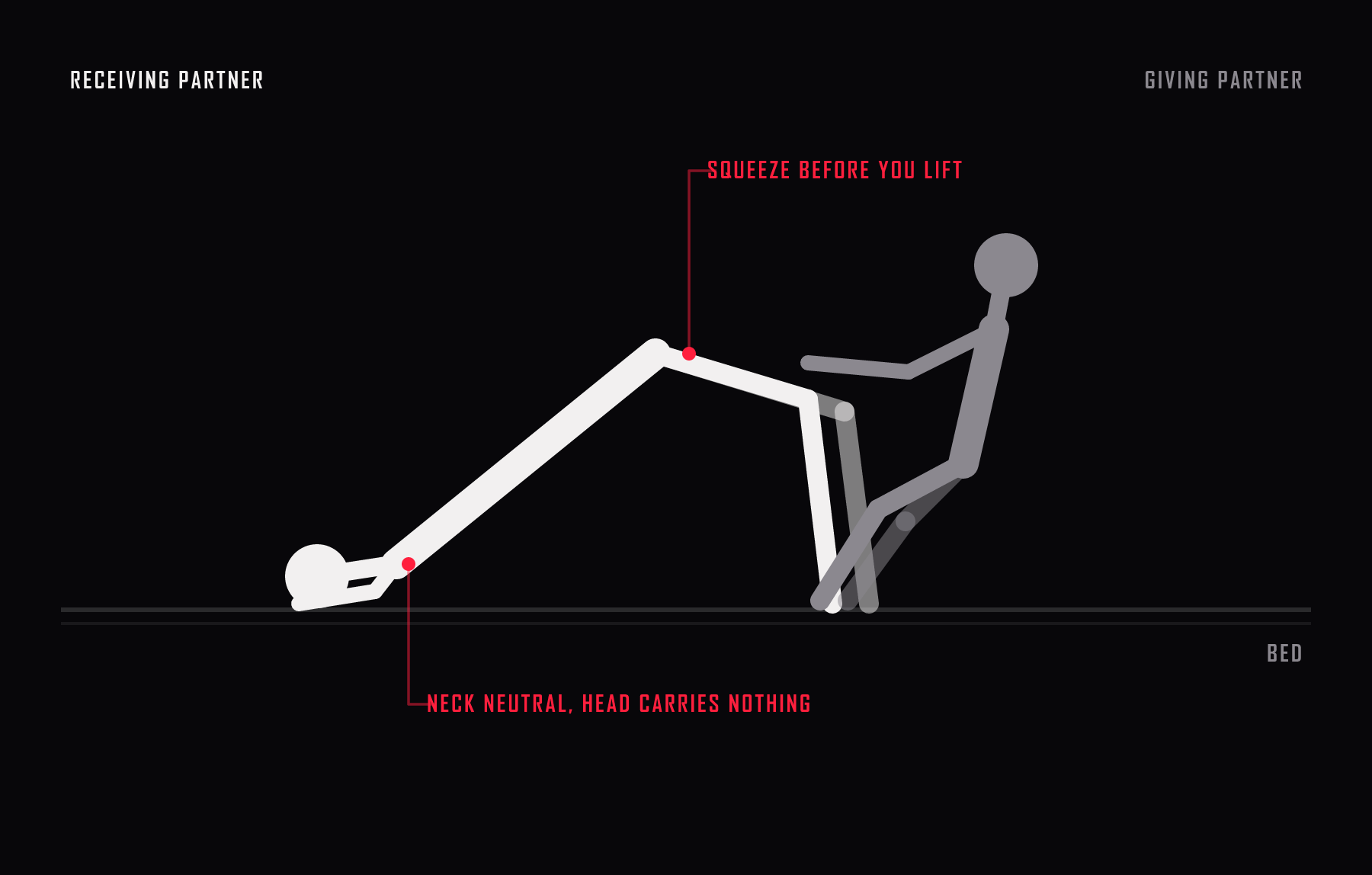
The receiver lies on their back with feet flat and knees bent. From there they drive the hips upward until the body makes a straight ramp to the shoulders. Shoulders stay on the surface. The head stays neutral. It is the same bridge you would find in any basic strength routine, held with company.
The other partner comes in at the hips, kneeling if the bridge is low or standing if the surface is high enough. Their job is partly stability. A hand on each hip or under the lower back turns a wobbling shape into a steady one. That matters more here than in an ordinary kneeling position.
WhyThe Angle Works
Lifting the hips tips the pelvis and changes where contact lands. That tilt is the entire appeal. It creates an angle you simply cannot reach when the receiver's back is flat, and it does so without folding anyone in half.
There is a second effect worth mentioning. A braced core changes how sensation registers, since everything is held taut rather than loose. Some people find that sharpens things considerably. If you like the tipped pelvis but not the strength requirement, the mating press reaches a similar angle. The receiver stays fully supported there.
How high does the bridge go?
Slide from a pillow-propped tilt to a full unsupported bridge. Higher means a sharper angle and a much shorter clock.
How To ActuallyDo It
- 1
Set the feet
The receiver lies back with feet flat and heels close to the backside. Feet too far forward makes the lift twice as hard.
- 2
Squeeze, then lift
Tighten the glutes before raising the hips so the lift does not come from the lower back. Stop when the body makes a straight ramp.
- 3
Anchor the shoulders
Shoulders press down into the surface and the arms stay flat for balance. The neck stays neutral and does no work at all.
- 4
Move in at the hips
The other partner kneels or stands right at the hips and places a hand on each side. Support first, movement second.
- 5
Watch the clock
Plan on thirty to sixty seconds, then come down on purpose rather than collapsing. Rest and repeat if both of you want more.
YesIt Burns
Being honest about this saves disappointment. A bridge is a static hold across the glutes and hamstrings. Most people hold a clean one for well under a minute before the shake sets in. That is with nothing else going on.
The shake is not a failure. It is exactly what a held bridge does. The mistake is pushing through it. A bridge that collapses under load drops the whole body weight in one awkward landing. Come down deliberately and rest for thirty seconds. Go back up if you want.
Lower back tightness is the other common complaint. It usually means the hips are driving from the spine instead of the glutes. Squeeze the backside first and then lift. The arch flattens out. If you want to avoid the burn entirely, the receiver can rest their shoulders on a couch edge. That turns the hold into something much closer to the supported feel of the crab position.
PropsThat Help
A firm cushion under the hips changes everything. It carries part of the lift, so the receiver holds a half bridge rather than a full one. That buys several extra minutes without changing the look much.
Elevation is the other lever. Set up on a bed or a low table with the hips near the edge. The standing partner avoids crouching and the receiver does not have to lift as high. A high surface also makes the whole thing steadier.
You can also flip the geometry. Have the receiver bridge with their shoulders on the bed and their feet on the floor. It shortens the hold and gives them somewhere solid to push from. That version shares some of the dangling logic of the waterfall, except with the hips up instead of the head down.
What is your core tonight?
Tap the mood.
WhoIt Is For
This suits people who already do some kind of strength work and who like the drama of a hard shape. It also suits couples who switch positions often. The london bridge is naturally a thirty second visit rather than a place to stay. Working it into a longer sequence is the usual approach. That fits neatly with the pacing ideas in the guide to going longer.
Skip it if the receiver's lower back objects to bridges in general, or if either of you wants something slow and settled. There are gentler ways to get a lifted angle. An inverted option like the butter churner is a different kind of hard rather than an easier one.
What GoesWrong
Lifting from the lower back
Squeeze the glutes before raising the hips so the lift starts in the right place. Coming up back-first is how a core hold turns into a sore lower back.
Treating the shake as something to push past
The shake is the signal, not the challenge. This is a static hold on a short clock, and coming down on purpose is part of doing it properly.
Planting the feet too far from the hips
Heels close to the backside is what makes the shape hold. Feet too far forward drops the hips and puts the whole load somewhere it does not belong.
Questions PeopleAsk
What is the london bridge sex position?
The london bridge has the receiving partner holding a raised bridge, with the hips lifted and the shoulders down on the surface. The other partner kneels or stands at the hips. The lifted shape creates a tipped pelvic angle that a flat position cannot reach.
How long can you hold the london bridge?
Most people manage thirty to sixty seconds before the legs start shaking. That is normal for any bridge hold. Treat it as a short highlight and come down deliberately rather than pushing to failure.
Why does the london bridge hurt your lower back?
Usually because the lift is coming from the spine rather than the glutes. Squeeze the backside first and then raise the hips. The arch flattens out. Moving the feet closer to the body also takes pressure off the lower back.
London bridge or crab, which is easier?
The crab is easier to hold because the receiver keeps more of their weight supported underneath them. The london bridge asks for a sustained core hold with nothing underneath. Start with the crab if bridges are not part of your usual routine.
Do you need to be fit for the london bridge?
You need enough core and glute strength to hold a bridge for about half a minute. A cushion under the hips or shoulders on a couch edge lowers that bar considerably. Neither version requires anything close to athletic training.